



How to talk to your daughter about her period without it being awkward
3 de August de 2026
Menstrual cup: who should think twice before using it?
31 de August de 2026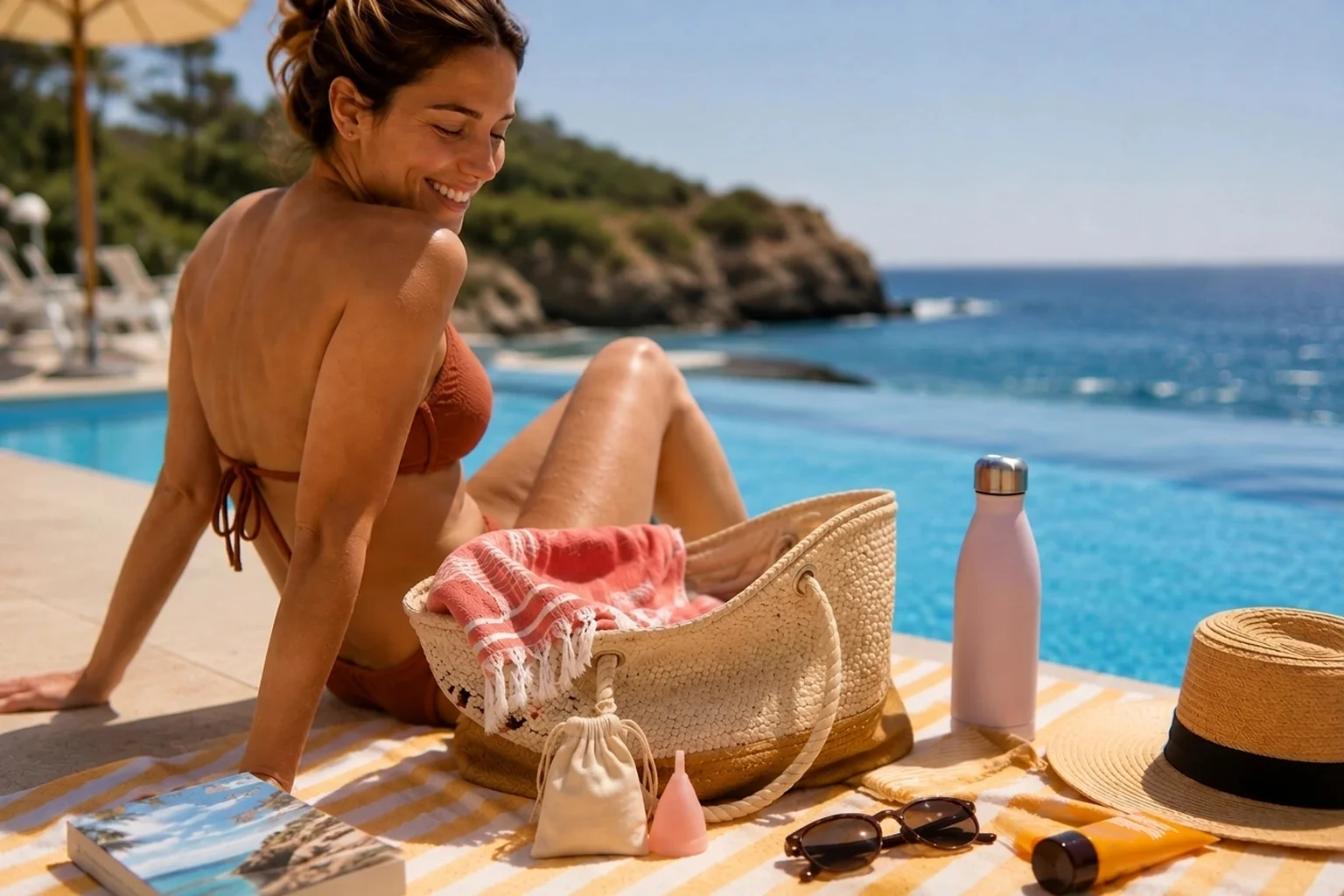
When summer arrives and the thermometer doesn't drop below thirty degrees, there's a question that keeps coming up in conversations at the beach, pool, and terrace: what do I do with my period if it's so hot?
Menstruation and Summer
Menstrual cup in summer, the most comfortable way to manage your period when the heat is on
It’s not just the sweat. It’s the clingy clothes, the unforgiving swimsuit, and that urge to jump into the water without worrying about whether the tampon string is visible. The menstrual cup in summer is gaining popularity every year because it solves many of these issues at once: fewer changes, less plastic in the beach bag, and a feeling of dryness that is especially appreciated in August. Let’s explore what really changes with the heat, how to choose the menstrual cup for summer, and what mistakes to avoid before diving in.
Does menstruation change in summer?
There’s a notion that has circulated for years: that heat can either advance or delay your period, or that the cycle goes haywire just because it’s August. The actual relationship is more indirect. Heat itself doesn’t alter the cycle, but travel, changes in schedule, less sleep, or different eating habits during vacation can affect it, as they impact the hormonal axis that regulates menstruation.
What is true is that with high temperatures, the body retains more fluid and sweats more, which can make the period in summer feel different even if the bleeding volume doesn’t change. The bloating or fatigue that some experience during those days usually comes from the combination of menstruation and heat, not because one causes the other. It’s important to keep this in mind before jumping to strange conclusions about your body every time the thermometer rises. Additionally, sleeping differently, drinking less water than needed, and irregular meals are factors that can also advance or delay your period without heat being directly involved.
Why the menstrual cup is a better fit for
the heat

Beach, pool, and menstrual cup
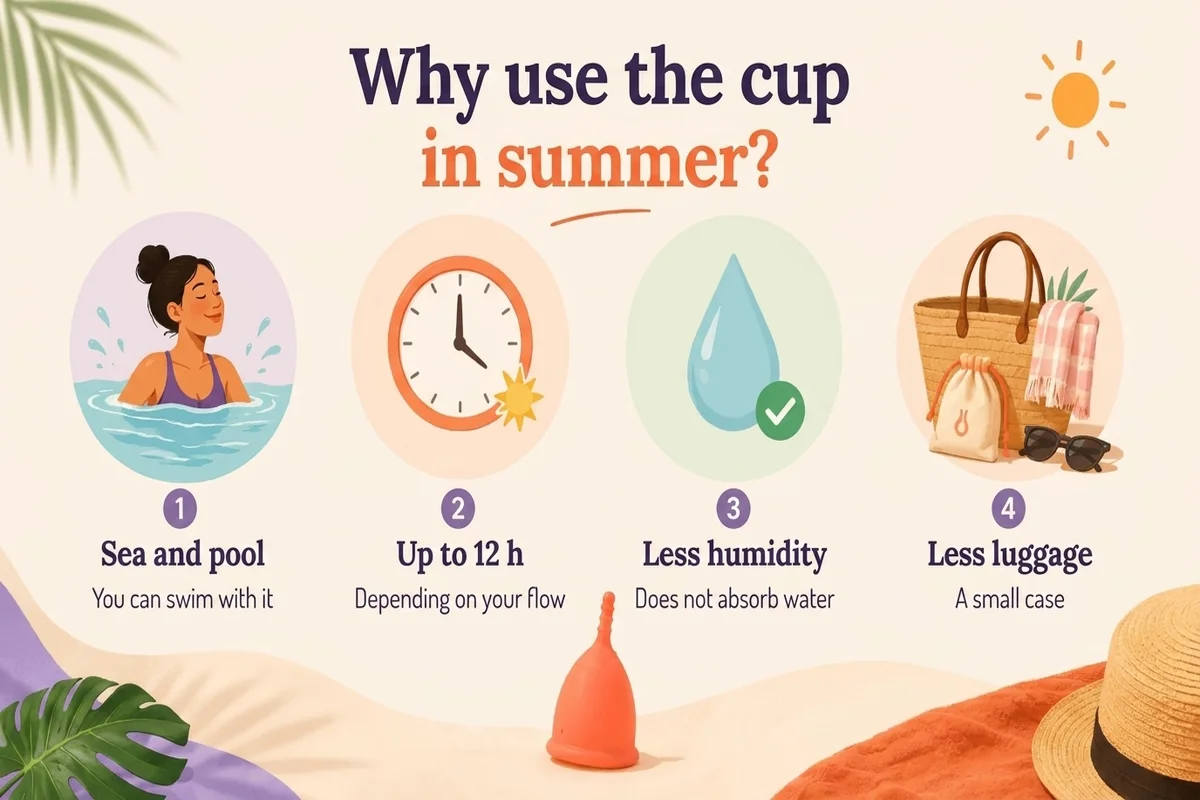
Swimming with your period using a pad isn’t an option, and using a tampon means calculating timing, uncomfortable changes in a public restroom, and that lingering feeling of dampness. With the menstrual cup, you can dive into the sea or the pool just like any other day: the cup doesn’t absorb water or let it in, so the bleeding continues as usual without mixing with the surrounding water. The placement is the same in and out of the water. If you have doubts about whether you’ve placed it correctly before leaving home, this guide on how to know if you’ve placed the menstrual cup correctly explains it step by step, with signs indicating that it’s positioned properly.
Sweat, humidity, and fewer changes
In summer, you change pads or tampons more often, not because you bleed more but because the heat and humidity make everything feel more noticeable. The menstrual cup can be worn for up to twelve hours, depending on each person’s flow, allowing you to head out in the morning and go to the pool, the beach, and dinner without searching for a restroom in the afternoon. Fewer changes also mean less waste on a day when you’re already carrying a beach bag and sunscreen.
"Last year I went to the beach for a week right when I had my period, and it was the first time I didn’t spend the day worrying about whether it was time to change. I swam like it was any other day and that was it."
Marta, 34 years old, Valencia
Before diving into how to choose the cup, it helps to take a quick look at what changes between the options when heat is involved.
| With heat involved | Pad | Tampon | Menstrual cup |
|---|---|---|---|
| Contact with water (sea/pool) | Not an option | Absorbs water, not recommended | No problem, in and out of the water |
| Hours between changes | Approx. 3-4 h | Approx. 4-6 h | Up to 12 h depending on flow |
| Feeling of dampness with heat | High | Medium | Low |
| Waste generated in a day at the beach | Several | Several | None |
| Space in the beach bag | Whole pack | Whole pack | A small case |
How to choose a menstrual cup for summer
Not all menstrual cups are equally suited for a vacation with a pool, hiking, or a beach day from start to finish. The size depends on your flow, your age, and whether you have had vaginal births, rather than the season, so it's wise to check the size guide before purchasing. A cup that is too large can be more noticeable with a fitted swimsuit, and one that is too small requires more frequent emptying just when you least want to look for a bathroom.
The medical silicone used to make the menstrual cup does not retain odors or become saturated with heat like a panty liner can after a whole day, and once inserted, it is not noticeable under clothing, including a bikini or a one-piece swimsuit. Being a non-absorbent material, it also does not dry out or harden after hours in the heat inside your beach bag, something that can happen to a tampon outside its wrapper.
Traveling with a menstrual cup: suitcases, backpacks, and beach bags
Putting a box of tampons or pads in your suitcase takes up space and, if the trip is extended, forces you to buy more on the go, sometimes in another language. The menstrual cup fits in a case the size of a lipstick and lasts for years with basic care. For daily use, just rinse it with water; if water is not available, like on a hike, you can dry it with paper and wash it well as soon as possible.
If it's your first summer with a cup
If you've never used a menstrual cup and want to try it before your vacation, it's best to test it at home a few days before a trip or a beach weekend, not the same day you need it for the first time. This beginner's guide to the menstrual cup covers folding, insertion, and the first emptying, which is where most doubts arise at the beginning. Practicing in a quiet bathroom on an ordinary Tuesday avoids the nerves of doing it for the first time in a beach bar restroom.
5 keys to using a menstrual cup in summer
Choose the size based on your flow and history, not based on the trip
Try it at home before the first time out
You can swim in the pool or sea without changing your routine
Wash your hands before touching it, even at the beach
A gap of 10-12 h is sufficient, don’t push the limit
"I tried it at home a couple of weekends before a trip to Portugal, without any rush. By the time the flight day arrived, I already knew how to put it on, and I didn't pack a single tampon."
Sofia, 27 years old, Seville
Common mistakes with the menstrual cup in summer
The most common mistake is extending the hours of use because a trip doesn't allow for stopping to empty it; it's advisable to think about a break every ten to twelve hours, without pushing the limit. The second is touching the cup right after applying sunscreen without washing hands, which can irritate the skin. The third is choosing the cup out of fear that "it will show with the bikini," when once placed above the pelvic bone, it is not noticeable with any garment. And the fourth, common among beginners, is not reviewing the user manual before the first trip and discovering on the go how to fold it, with the rush of a beach bathroom in between.
A care that often takes a back seat in summer, but is important: washing hands with soap and water before emptying or placing the cup, even in a pool or beach bathroom, even if the faucet is only partially working. The female intimate health guide for summer by Quirónsalud emphasizes several similar habits, such as changing out of wet swimwear as soon as possible and avoiding tight clothing in the heat, tips that pair well with using a menstrual cup instead of pads.
Discover the Papaya menstrual cup
Medical silicone, odor-free, up to twelve hours of protection, and designed to be worn even in water.
See available sizes →Frequently asked questions about the menstrual cup in summer
Can I swim with the menstrual cup on?
Yes, both in a pool and in the sea. The cup does not let water in and does not move more than normal while swimming; it behaves the same as on land.
Is the menstrual cup noticeable with a swimsuit or bikini?
No, once correctly placed, it sits above the pelvic bone and is not noticeable either to the touch or visually, neither with a bikini nor with a fitted swimsuit.
How many hours can I wear the menstrual cup in summer?
Up to twelve hours, although with heavy flow it may be advisable to empty it sooner. Heat does not require changing it more frequently on its own.
Which cup is best if I'm going to use it for the first time on vacation?
It's best to choose the size based on your flow and birth history, not based on the trip date, and to try it at home first following the beginner's guide.
Can I empty the cup in a pool or beach bar bathroom?
Yes, even if there isn't much privacy. Just rinse it with water or, if that's not possible, empty it and rinse it well as soon as you get to a bathroom with more calm.
Does heat cause heavier bleeding during the period?
There is no evidence that heat increases the volume of bleeding. What changes is the feeling of bloating and sweating, which adds to the days of menstruation and heat without altering the cycle itself.
Having your period in summer shouldn't mean giving up the pool, a light dress, or a whole day without worrying about where there's a bathroom nearby. Switching from a tampon or pad to a menstrual cup doesn't solve the heat, but it removes a good part of the discomfort that usually comes with it. If you want to see the rest of the available sizes, at papayacup.com you have the entire range to choose the one that best fits your body this summer.