



Switching from menstrual cup to menstrual disc: the changes you’ll experience
5 de October de 2026
Cutting the menstrual disc stem, when and how to do it
5 de October de 2026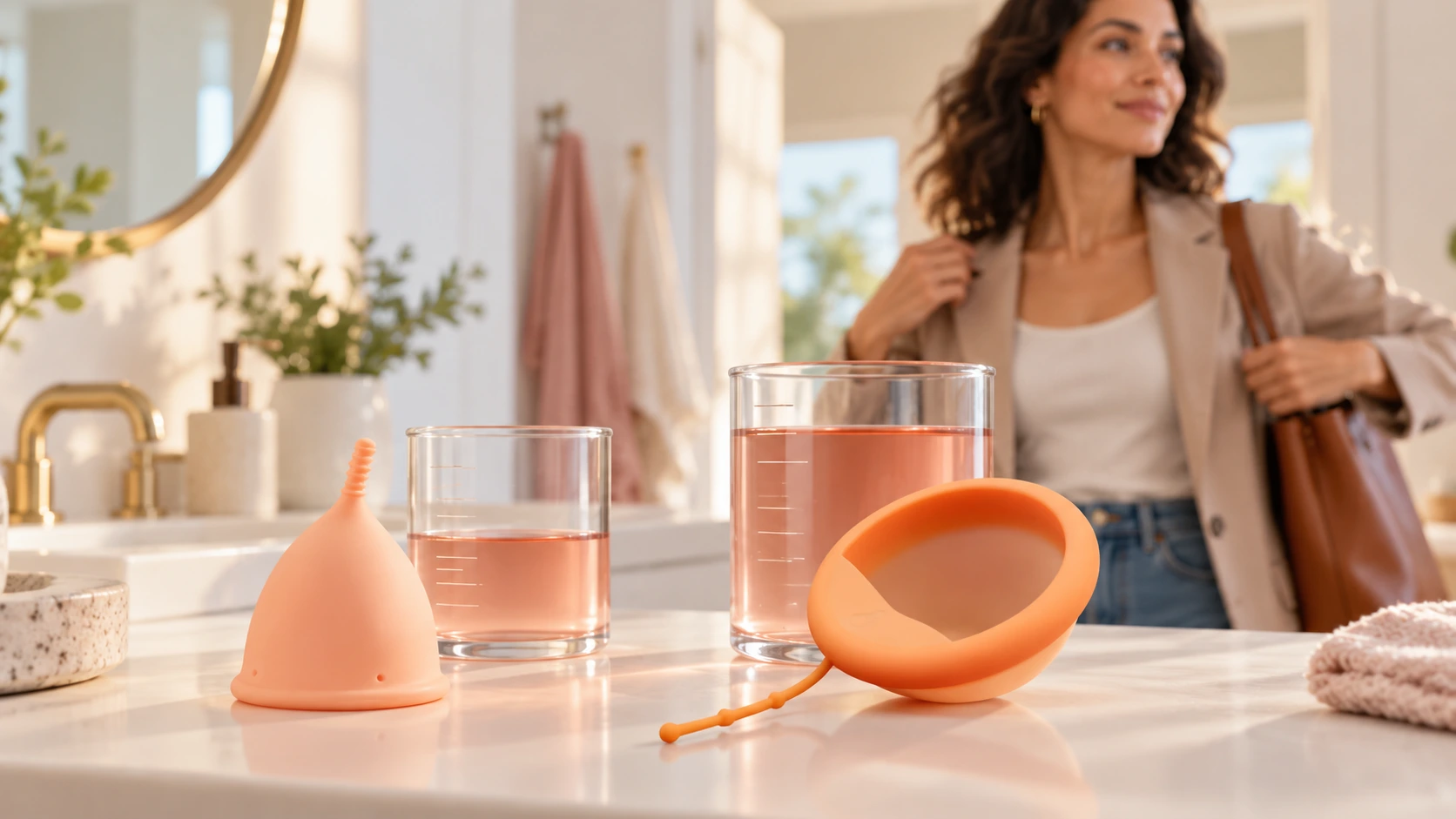
How much fits in a menstrual disc compared to a menstrual cup, how often to empty it on heavy days, how to sleep with it, and when a heavy period stops being normal.
Inhaltsverzeichnis
- I have very heavy periods, is the menstrual disc suitable for me?
- How much fits in a menstrual disc compared to a cup
- What size of menstrual disc to choose for heavy periods
- How often to empty the disc on heavy days
- How to remove the menstrual disc when it's full
- How to organize your night with heavy flow
- When heavy flow stops being normal
- Up to 60 ml for your heaviest days
- Frequently Asked Questions about the menstrual disc for heavy periods
I have very heavy periods, is the menstrual disc suitable for me?
If during the first two days of your period you find yourself constantly checking the clock and looking for the nearest bathroom, the question makes sense. Our PapayaDisc is designed for light and heavy bleeding, and holds significantly more volume than our menstrual cups.
Here, we don’t want to rely on memory. The figures in this article come from the measurements of our own products, our manual, and a health source we link to. Let’s see how much fits in a menstrual disc during heavy periods, what size to choose, how often to empty it, how to remove the menstrual disc, how to organize your night, and when heavy periods stop being normal and it’s time to make an appointment.
How much fits in a menstrual disc compared to a cup
According to the measurements in our size guide for the menstrual disc, the size S of PapayaDisc holds 45 ml and the L size holds 60 ml. Our menstrual cups hold 20 ml for size S and 25 ml for size L. This means that the capacity of the menstrual disc in size L is more than double that of our largest cup.
To put it in context, in our article about what a normal period is, we explain that it is estimated that a loss of between 30 and 40 ml of blood occurs throughout menstruation, and that more than 80 ml per cycle is considered excessive bleeding. With more volume, the disc fills up faster, which is why the capacity of each size matters so much in a menstrual disc during heavy periods.
"With the cup, on the first day I had to empty it mid-morning and again after lunch, and even then sometimes it overflowed. With the L disc, I manage by emptying it at noon and at night."
Raquel, 36 years old, Zaragoza
What size of menstrual disc to choose for heavy periods
In our size infographic, each size is associated with a type of flow and a guiding profile. Here are the details as we published them:
| PapayaDisc | Capacity | Diameter | Indicated flow | Guideline profile |
|---|---|---|---|---|
| Size S | 45 ml | 60 mm | Light to normal | Low cervix, under 30 years old, cesarean birth |
| Size L | 60 ml | 68 mm | Normal to heavy | High cervix, over 30 years old, vaginal birth |
The guide itself emphasizes that these are general recommendations and that every body is unique. There are women under 30 who prefer size L and women with vaginal births who feel more comfortable with size S. Therefore, in addition to flow, it is important to know the position of your cervix: if you can easily touch it with your fingertip during your period, it is probably low, and if you can barely reach it, it is high.
If you're unsure, the comfort pack of 2 menstrual discs S+L with sterilizer allows you to try both sizes, discover which one fits your anatomy better, and also adapt to the different phases of your cycle.
How often to empty the disc on heavy days
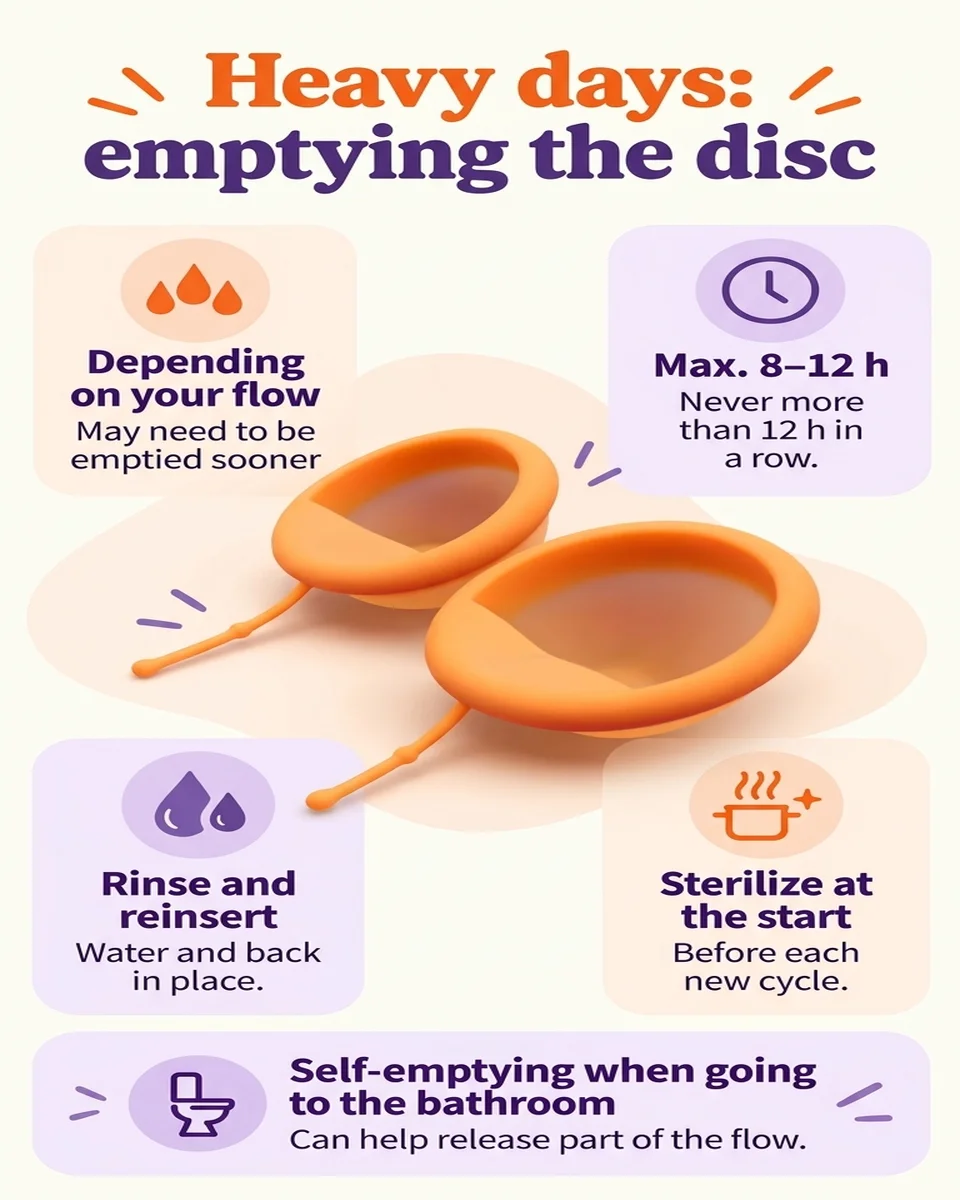
In our menstrual disc manual, we indicate that you should empty and rinse it, depending on the flow, at most every 8 to 12 hours, and never wear it for more than 12 consecutive hours. This limit does not change even if the disc is not full. The part of "depending on the flow" is what counts during heavy periods: the more you bleed, the sooner it fills up, so on heavy days you may need to empty it before that maximum.
This 12-hour limit has a reason. In the PapayaDisc information, we explain that accumulated blood can become a breeding ground for bacteria and increase the risk of toxic shock syndrome. During your cycle, simply empty the menstrual disc and rinse it with water before reinserting it, and at the beginning of each new cycle, it is advisable to sterilize it, never for more than 3 minutes to avoid damaging the silicone.
Self-emptying when going to the bathroom
In our article about what the menstrual disc is and how it works, we mention that some users experience self-emptying when going to the bathroom, which can help reduce the volume before removal. With a menstrual disc during heavy flow, that can be beneficial. Also, remember that, as we explain in the manual, there is no need to remove it to urinate or defecate.
"I didn't know about self-emptying, and the first time I saw blood in the toilet, I thought I had it positioned wrong. Now I find it even practical on heavy days."
Noelia, 29 years old, Murcia
How to remove the menstrual disc when it's full
To know how to remove the menstrual disc without making a mess, follow what we explain in the manual: adopt a comfortable position, locate the pull tab, and gently pull only until you reach the edge. The pull tab is not meant to remove it entirely, but as a guide to reach the base. Then, hold the edge and remove it horizontally to avoid spills.
Sitting on the toilet, squatting in the shower, or with one leg resting on the toilet or bathtub.
Hold it by the edge and remove it this way to avoid spills.
Breathe deeply and relax before reaching for the pull tab.
In the blog, we also mentioned that some people prefer to remove it in the shower for added peace of mind. If you're having trouble removing it, squat and apply gentle pressure downwards, as if you were going to urinate, and try to reach for the pull tab again. If you try several times without success, seek medical help. The menstrual disc cannot get lost inside your body.
How to organize your night with heavy flow
As indicated in the product sheet, the PapayaDisc can also be used for sleeping. The only thing you can't skip is the maximum of 12 consecutive hours, so you need to organize your night by counting hours.
Your night with the disc, counting hours
Calculate how many hours it has been worn and how many you will sleep. If the total exceeds 12, empty it before going to bed.
You don't need to remove it to urinate or have a bowel movement.
Empty it and rinse it with water before reinserting it, always within the 12-hour limit.
Having to get up at night to change your protection is one of the symptoms of heavy bleeding noted by the Mayo Clinic.
"I would put in the disc in the morning and go to bed late without thinking about the hours. Now I check how long it has been in, and if the math doesn’t add up, I empty it before going to bed."
Carmen, 42 years old, Valladolid
When heavy flow stops being normal
In our article about normal periods, we explain that excessive bleeding, over 80 ml per cycle, can be a sign that something is wrong, just like needing to change your pad or tampon every hour for several consecutive hours. The Mayo Clinic details what symptoms may indicate heavy menstrual bleeding:
Signs to schedule an appointment with your doctor
- Soaking one or more pads or tampons every hour for several consecutive hours.
- Needing double protection to manage the flow.
- Getting up at night to change your pads or tampons.
- Bleeding for more than a week.
- Passing clots larger than a quarter.
- Limiting your daily activities due to the flow.
- Feeling tired, fatigued, or short of breath due to blood loss.
The Mayo Clinic recommends seeking medical help before your next check-up if the bleeding soaks at least one pad or tampon per hour for more than two consecutive hours. It also explains that very heavy periods can lower iron reserves and cause anemia, and among the possible causes, it cites hormonal imbalances, fibroids, polyps, adenomyosis, or a non-hormonal IUD. If you recognize any of these signs, make an appointment.
Up to 60 ml for your heaviest days
Our disc is made of medical-grade silicone, can be worn for 8 to 12 hours, and is also suitable for sleeping. It comes in two sizes for you to choose based on your flow and body.See menstrual discs →
Frequently Asked Questions about the menstrual disc for heavy periods
What is the capacity of the PapayaCup menstrual disc?
Size S holds 45 ml and size L holds 60 ml. Our cups hold 20 ml for S and 25 ml for L.
Is the menstrual disc suitable for heavy periods?
Our PapayaDisc is suitable for light and heavy bleeding. In the size guide, L is indicated for normal to heavy flow, although the size also depends on the height of your cervix.
Can I wear the disc for more than 12 hours if it's not full?
No. Even if it's not full, it should not be worn for more than 12 consecutive hours, as indicated in the manual.
How do I remove the menstrual disc without spilling when it's very full?
Gently pull the tab only until you reach the edge, hold the edge, and remove it horizontally. Doing this while sitting on the toilet or squatting in the shower makes it easier.
Can I sleep with the disc if I have a heavy period?
Yes, the PapayaDisc can also be used for sleeping. Just keep in mind that it cannot go more than 12 hours without being emptied from the time you put it in.
When should I seek help for heavy periods?
Mayo Clinic recommends seeking help if you soak through at least one pad or tampon per hour for more than two consecutive hours, and mentions other signs such as bleeding for more than a week, large clots, or fatigue from blood loss.
With heavy periods, the difference with the disc is in the capacity: up to 60 ml in size L, compared to 25 ml in our largest cup. Choosing the right size, respecting the maximum of 12 hours, and emptying it according to your flow is what makes the day-to-day manageable. And if your period fits any of the warning signs, consulting comes first. At papayacup.com, you can find our discs in sizes S and L.