




How to Remove Female Pubic Hair at Home – Complete Guide with Images
11 de May de 2026
Having sex on your period, stop avoiding it and start enjoying it
18 de May de 2026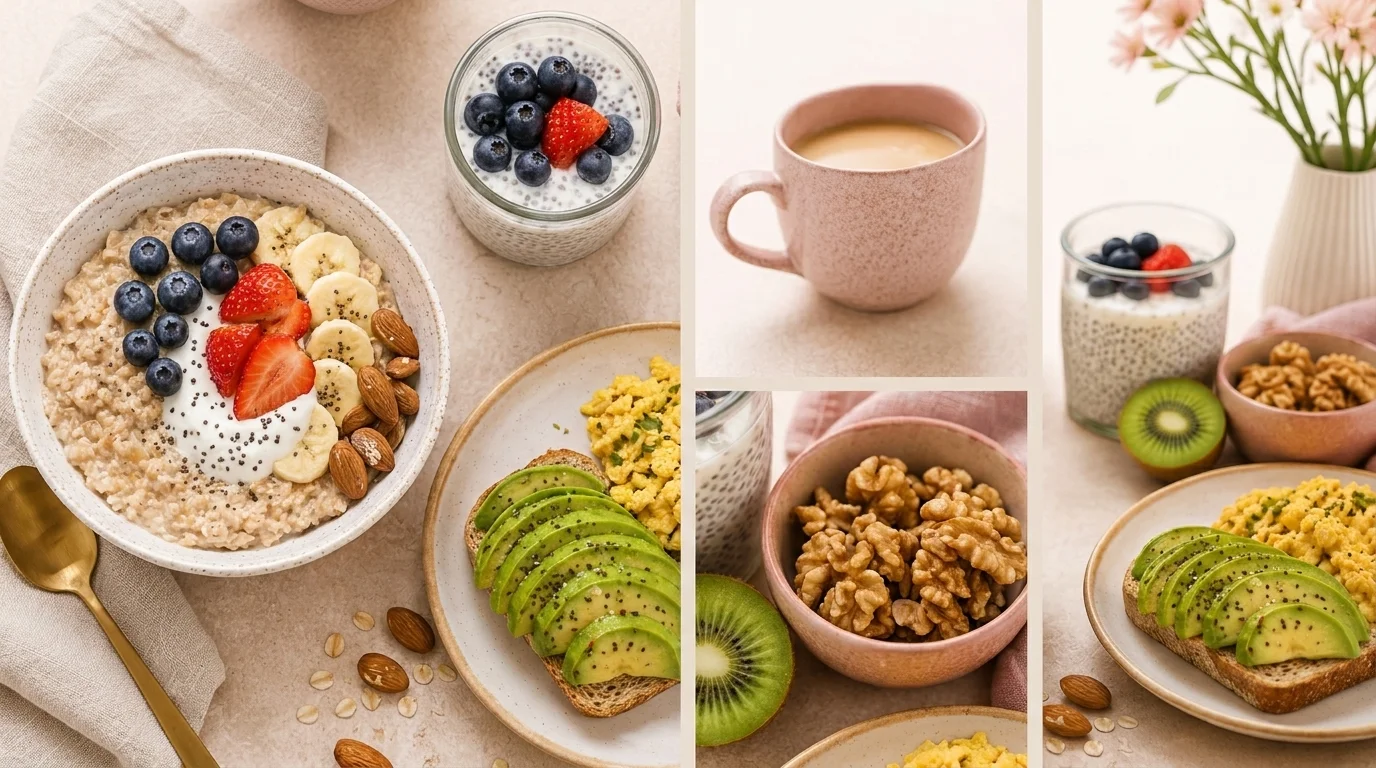
⚕️ This article is informative and does not replace medical consultation. Always consult your doctor or nutritionist with any questions.
Marta is 43 years old, wakes up early every day to take her kids to school, and has been feeling low on energy in the mornings for months. One day she searched on Google for what she could have for breakfast to feel better... and found a thousand contradictory options. Sound familiar? Healthy breakfasts are much more than a trend: they are a real tool to take care of your body during a time when it truly changes. In this guide, you will learn what to eat, why it matters at this specific age, and how to make it easy and sustainable. If you are also interested in anti-inflammatory nutrition for women, we’ll leave the link at the end of the article.
What is a healthy breakfast for women over 40?
If you were to ask yourself what you had for breakfast today and whether it was "healthy," you would probably hesitate. You are not alone: most women in their forties continue to eat the same way they did at 25, without realizing that our metabolism, hormones, and nutritional needs have changed significantly.
Definition and characteristics
A healthy breakfast after 40 is one that provides the nutrients the body needs at this stage:
- Quality protein (eggs, legumes, dairy) to maintain muscle mass, which naturally begins to decline.
- Healthy fats (avocado, nuts, olive oil) for hormonal balance and cardiovascular health.
- Complex carbohydrates (oats, whole grain bread, fruits) that release energy steadily, without glucose spikes.
- Abundant fiber to support intestinal transit and microbiota, which influence mood and inflammation.
- Calcium and vitamin D, especially important due to the drop in estrogen associated with perimenopause.
According to SEGO, starting at 40, hormonal changes prior to menopause can affect metabolism, bone density, and fat distribution. At Papayacup we have been supporting women in their comprehensive female health for years, and we see it reflected constantly in the well-being of those who take care of their nutrition.
Who is this approach suitable for?
For any woman between 40 and 55 years old who wants to gain energy, maintain a stable weight, and prevent long-term health issues. Also for those who experience intense premenstrual syndrome, chronic fatigue, or simply feel that their body "is no longer the same."
Key nutrients in breakfast for women over 40
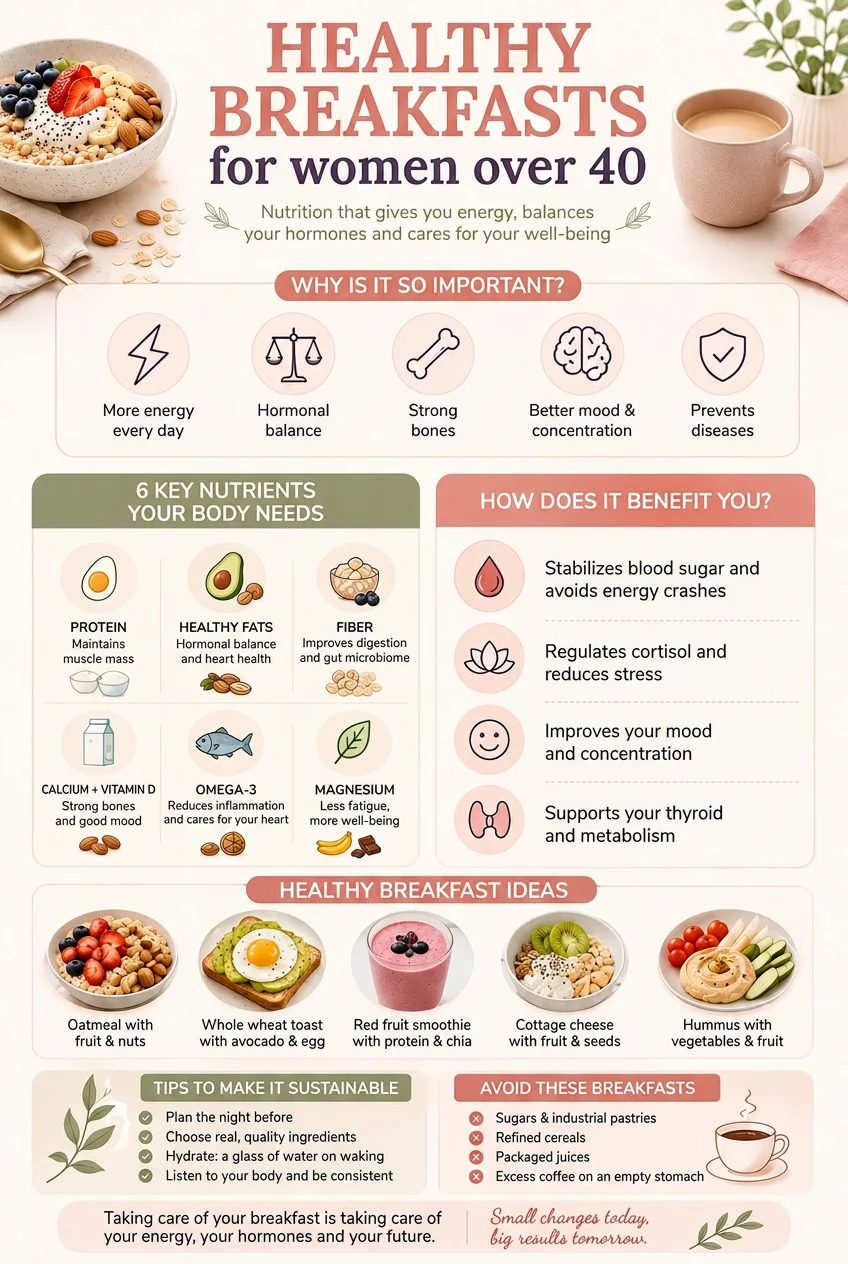
Here’s a quick look at the 6 nutrients that matter most at this stage, why you need them, and where to find them in your breakfast:
Key Nutrient | Why It Matters at 40 | Source Foods | Recommended Amount |
Protein | Preserves muscle mass | Eggs, Greek yogurt, legumes | 20-30 g per breakfast |
Calcium | Protects bones against declining estrogen | Dairy, fortified soy milk, almonds | 300-400 mg |
Omega-3 | Reduces inflammation and supports heart health | Walnuts, chia seeds, salmon | 1-2 g / day |
Fiber | Regulates gut and microbiota | Oats, whole fruit, seeds | 7-10 g in breakfast |
Vitamin D | Calcium absorption and mood | Egg, fortified dairy, sunlight | 600-800 IU / day |
Magnesium | Reduces fatigue and supports the nervous system | Cocoa, banana, nuts | 80-120 mg in breakfast |
Sources: SEGO — Nutritional recommendations in perimenopause | PubMed / NIH — Studies on nutrition and female hormonal health.
How a Healthy Breakfast Works for Women at 40
Imagine your body is a car: at 40, the engine is still the same, but the fuel needs have changed. What you could eat without issue at 25 may now leave you feeling drained by mid-morning or contribute to that chronic fatigue so common at this stage.
Breakfast impacts several systems in the body at once:
- Cortisol Regulation: proteins and healthy fats help stabilize it and prevent morning anxiety.
- Glycemic Control: fiber and protein slow down insulin spikes that cause mid-morning hunger and accumulate abdominal fat.
- Serotonin synthesis: complex carbohydrates help produce it. It's no coincidence that taking care of breakfast improves mood during premenstrual syndrome.
- Thyroid metabolism: the iodine and selenium found in eggs, dairy, or Brazil nuts support the thyroid, whose importance increases during the forties.
Clara, 44 years old, a rotating shift nurse in Seville, told us that since she switched her breakfast cookies for oatmeal with fruit and scrambled eggs, she handles morning shifts better and her weight has stabilized without dieting. It's not magic: it's physiology.
Advantages and disadvantages of healthy breakfasts
Being honest here is important: changing breakfast has many real benefits, but it can also be challenging at first.
Main advantages
- More energy and better concentration throughout the morning.
- Reduction of emotional hunger and binge eating in the afternoon.
- Gradual maintenance or loss of weight, especially in the abdominal area.
- Improved mood and less irritability during the menstrual cycle.
- Long-term bone and cardiovascular protection.
- Brighter skin thanks to the intake of antioxidants and essential fatty acids.
Limitations to be aware of
- Requires planning: if you don't have ingredients at home, it's hard to maintain.
- Somewhat higher cost: fresh foods cost more than ultra-processed ones, although oatmeal, eggs, or legumes are very economical.
- Adjustment period: your body may take 2-3 weeks to adapt, especially if you've been skipping breakfast for years.
- Not a medical treatment: it complements your treatment if you have any conditions, but does not replace it.
At PapayaCup, we have seen for years that taking care of breakfast is one of the smallest changes with the greatest real impact.
Practical guide for this week
The theory is great, but what will change your life is the practice.
Before the first change
- Write down what you usually have for breakfast this week. No judgment, just observation.
- Identify what you’re missing: protein? fruit? Do you eat too quickly or while standing?
- Go shopping for oats, eggs, nuts, natural yogurt, and seasonal fruit.
- Decide on a realistic schedule: you don’t have to wake up earlier, just organize yourself 10 minutes in advance.
3 breakfast options to start now
Option 1 — The classic remix (10 minutes): 2 scrambled eggs + whole grain toast + ½ avocado + coffee or herbal tea without sugar.
Option 2 — The oatmeal bowl (prepare the night before) 60 g of oats + plant-based milk + chia seeds + berries + walnuts.
Option 3 — The gluten-free express (for busy days) Natural Greek yogurt + banana + a handful of almonds + raw honey.
Sofia, 47 years old, a teacher in Barcelona, started with the overnight oatmeal option and within three weeks she no longer needed to snack before lunch. Small changes, big results.
Ready to start?
Now you know that healthy breakfasts are concrete choices you can make starting tomorrow. Your body at this stage deserves the best fuel possible, and nutrition is just one part of the puzzle.
If you want to continue taking care of yourself from the inside, at PapayaCup you will find resources specifically designed for women like you: from menstrual cups to tips on anti-inflammatory nutrition that perfectly complement what you just read.
We have been supporting real women in their overall well-being for years. With a satisfaction guarantee and personalized attention to resolve all your questions. Are you ready to try the menstrual cup?
Frequently asked questions about healthy breakfasts for women over 40
It is a morning meal with proteins, healthy fats, complex carbohydrates, fiber, calcium, and vitamin D, adapted to the hormonal and metabolic changes typical of this stage.
Yes, generally. If you have diabetes, hypothyroidism, or another condition, consult your doctor or dietitian first.
Always include all three macronutrients and choose foods you enjoy. There is no perfect universal breakfast: there is the one that works best for your body.
Ideally every day. If you can’t, start with 4-5 days a week. Consistency matters more than perfection.
At papayacup.com you will find guides, products, and personalized care for your health at every stage.