




Having sex on your period, stop avoiding it and start enjoying it
18 de May de 2026
Period, menstrual cup, and high-performance sports
18 de May de 2026
Does this situation sound familiar? You're at home, with your newly purchased menstrual cup, and after several attempts, doubt creeps in: did I put it in correctly? Is it creating a seal? What if I experience a leak at the worst moment? It's a super common feeling. Many of us, at first, have wondered exactly that: how to know if you have inserted the menstrual cup correctly? Don't worry: it's part of the adjustment process, and at PapayaCup, we are here to guide you.
In this article, you will learn the specific signs that confirm the cup is properly positioned, the most common mistakes, and how to fix them, all with real examples from users like you.
Inhaltsverzeichnis
- What you need before using the menstrual cup
- How to insert the menstrual cup: step by step
- Table: signs of correct vs. incorrect placement
- Common Issues and How to Solve Them
- Key Tips for Inserting the Cup Pain-Free
- Frequently asked questions about how to properly insert the menstrual cup
- Discover the PapayaCup menstrual cup
⚕️ This article is for informational purposes and does not replace medical consultation. Always consult your gynecologist with any questions.
What you need before using the menstrual cup
Before diving into the adventure of using the cup, think of it as preparing the ground for everything to go smoothly. It's not just about grabbing it and that's it: there are a few small steps beforehand that will make your first experiences much easier.
Laura started using the cup when she was swimming daily. At first, she felt a bit lost and doubted whether she was putting it on correctly. When she began to calmly follow these preliminary steps, everything changed: she felt much more confident and stopped having leaks in the pool forever.
The first thing is hygiene. Always, always wash your hands well with water and mild soap before handling the cup. If it's your first use, sterilize it by boiling it in water for 3–5 minutes.
Another key point is relaxation. Nerves can tense the vaginal muscles and make insertion difficult. Take your time, breathe deeply. Many PapayaCup users tell us that they felt some anxiety the first time, but with patience and calm, everything went much better.
And, of course, choosing the right size is crucial. A cup that is too large can be uncomfortable, and one that is too small won't seal properly. At PapayaCup, after years of supporting thousands of users, we've seen that size is the factor that most influences the experience from day one.
How to insert the menstrual cup: step by step
Don't get overwhelmed if it doesn't work the first time — it's completely normal. Think of it like learning to ride a bike: at first, you need practice, but once you get the hang of it, it becomes automatic.
Wash your hands. Choose your fold (C or punch-down). Find a comfortable and relaxed position.
Insert at an angle towards the back, not upwards. The stem should be inside the canal.
Turn 360°. Run a finger around to ensure it’s completely round.
Pinch the base to break the vacuum. Never just pull on the stem.
Step 1 — preparation and fold
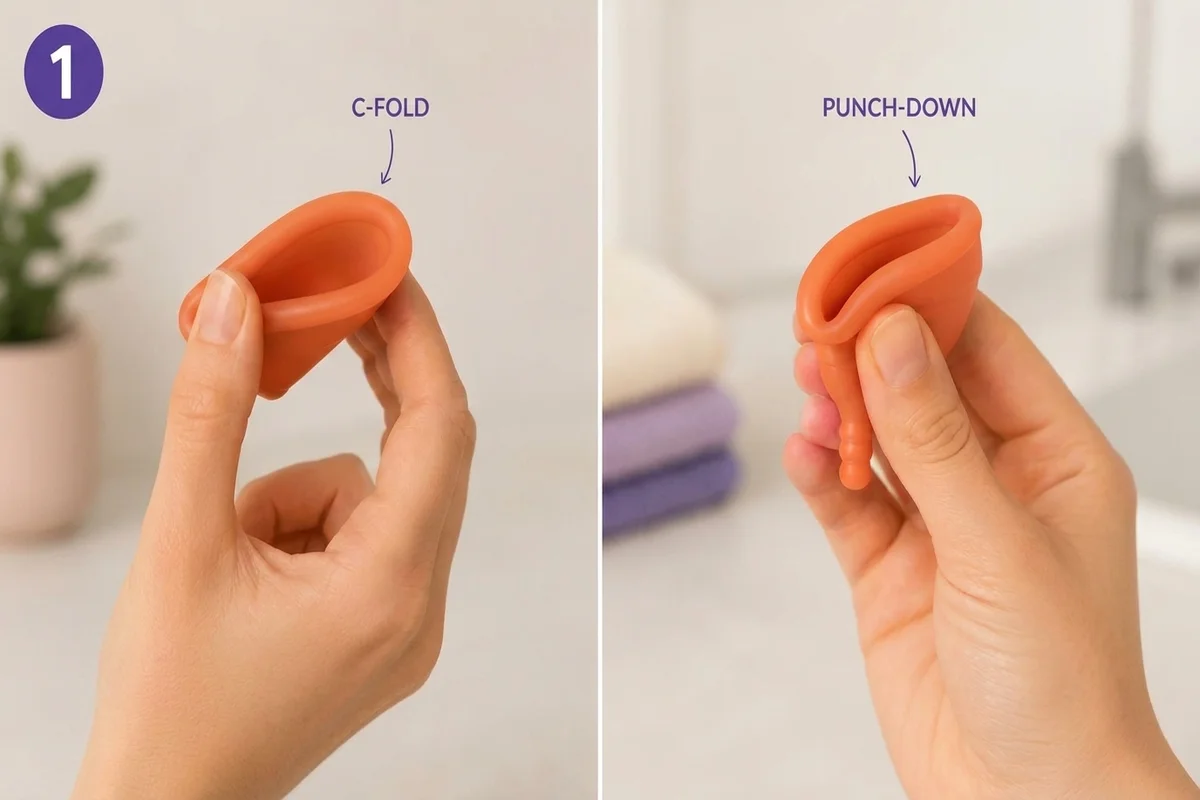
The most common folds are the C fold (you fold the edges inward) and the punch-down (you push one side towards the center, making the insertion point smaller and more manageable).
Marta always used the C fold because that’s what she was taught. After two cycles, she tried the punch-down and found it much easier. "It was a game changer," she told me. If one fold doesn’t convince you, try another.
Step 2 — insertion angle
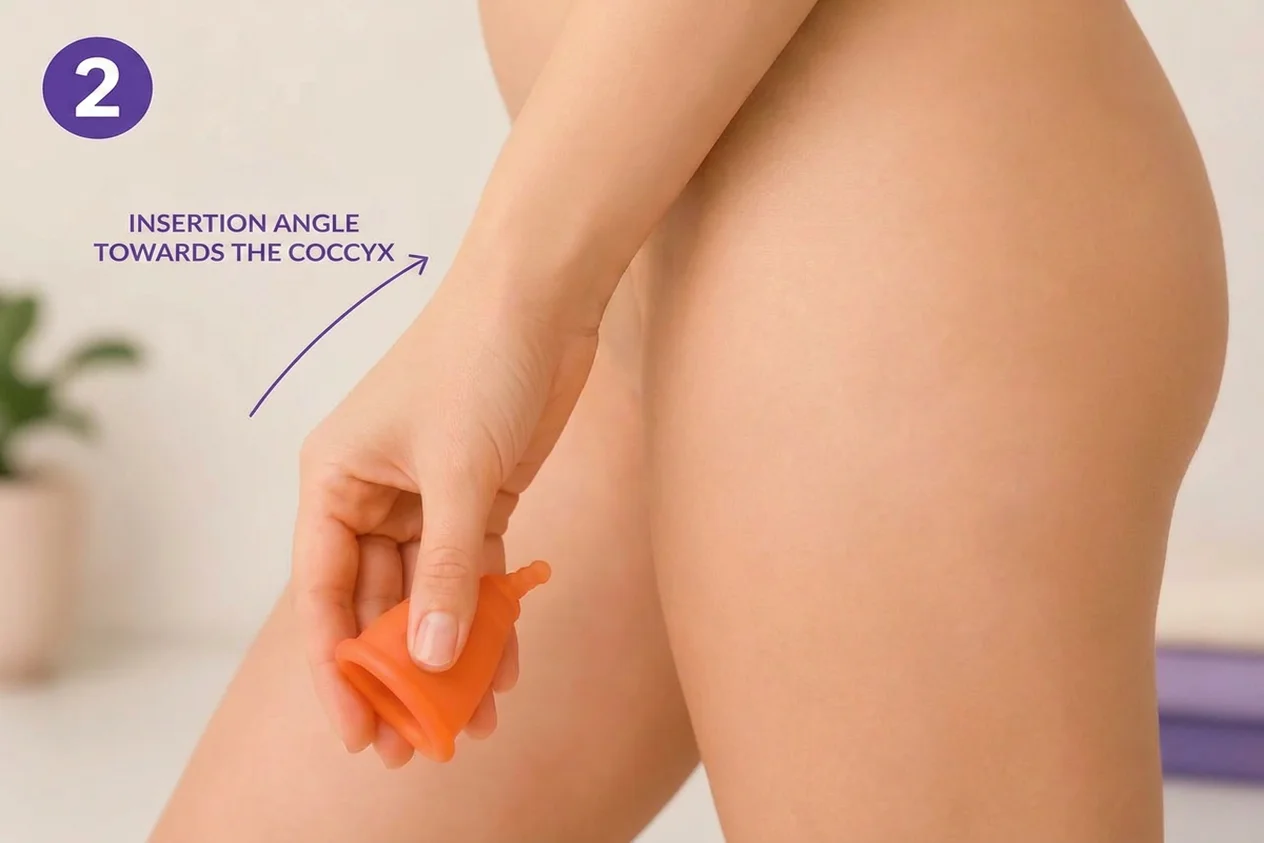
The cup does not go upwards, but diagonally towards the lower back (towards the coccyx), just like a tampon. Release it when you feel it's about 2–3 cm from the entrance.
Step 3 — check the seal (the key to everything)
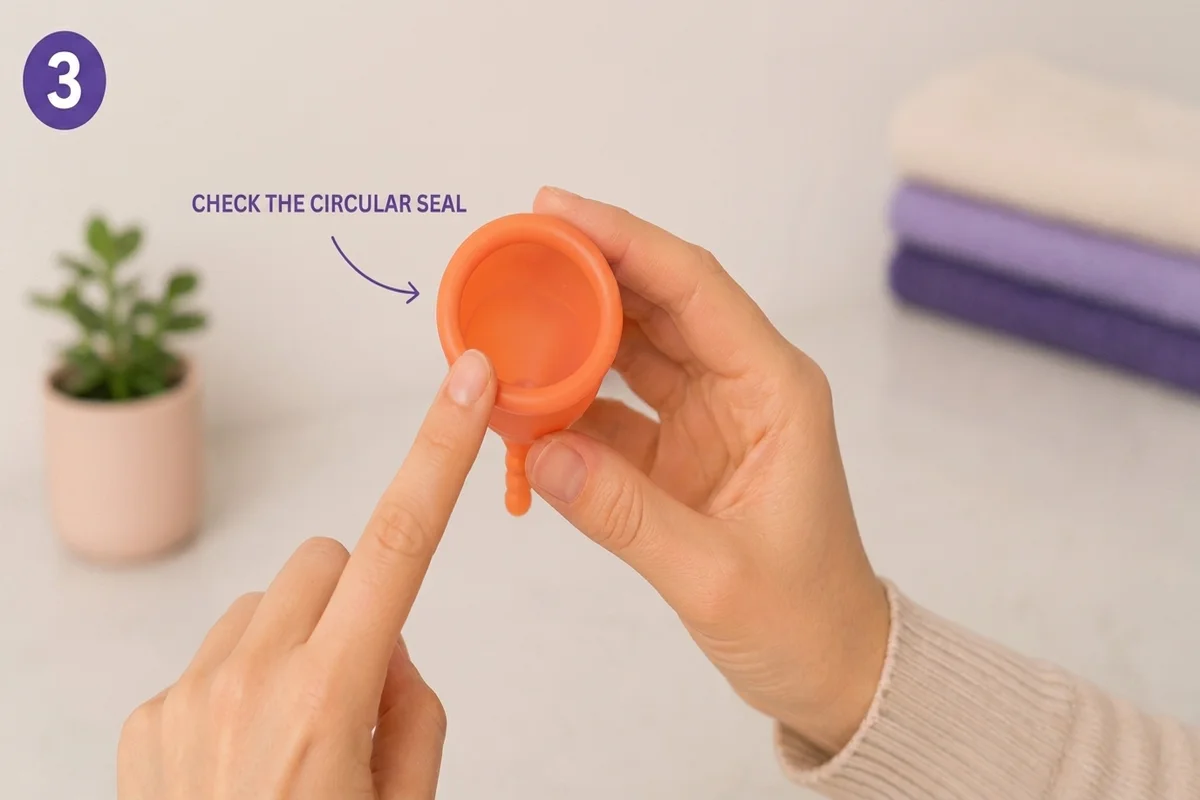
Once inserted, gently twist the cup 360° and run a finger around the outer edge. You should feel that it is completely round, with no folds. If you notice any part is flattened, twist it a bit more or gently push the edge with your finger.
If you are one of those who work many hours outside the home, like Ana, a dentist from Valencia, this step is vital: if the cup has not sealed properly before leaving home, you will have leaks halfway through your appointment. Since Ana learned to do this 5-second check, she hasn’t had any accidents.
Step 4 — safe removal
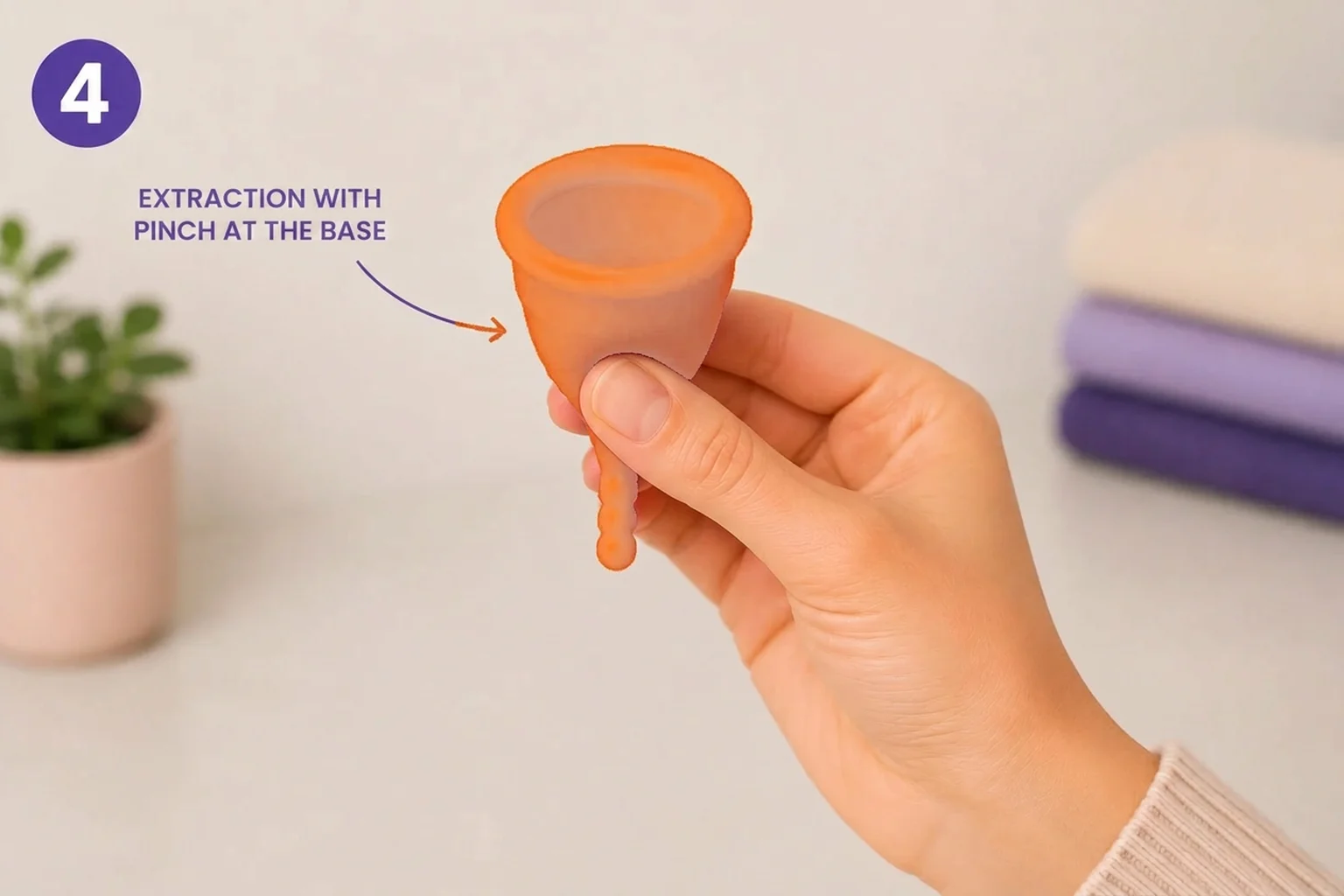
Never just pull on the stem. Pinch the base of the cup to break the vacuum, then remove it with gentle zigzag movements. If you have to pull hard, stop and pinch higher up.
Table: signs of correct vs. incorrect placement
If you are more visual, this table allows you to quickly see if your cup is well placed or needs adjustment.
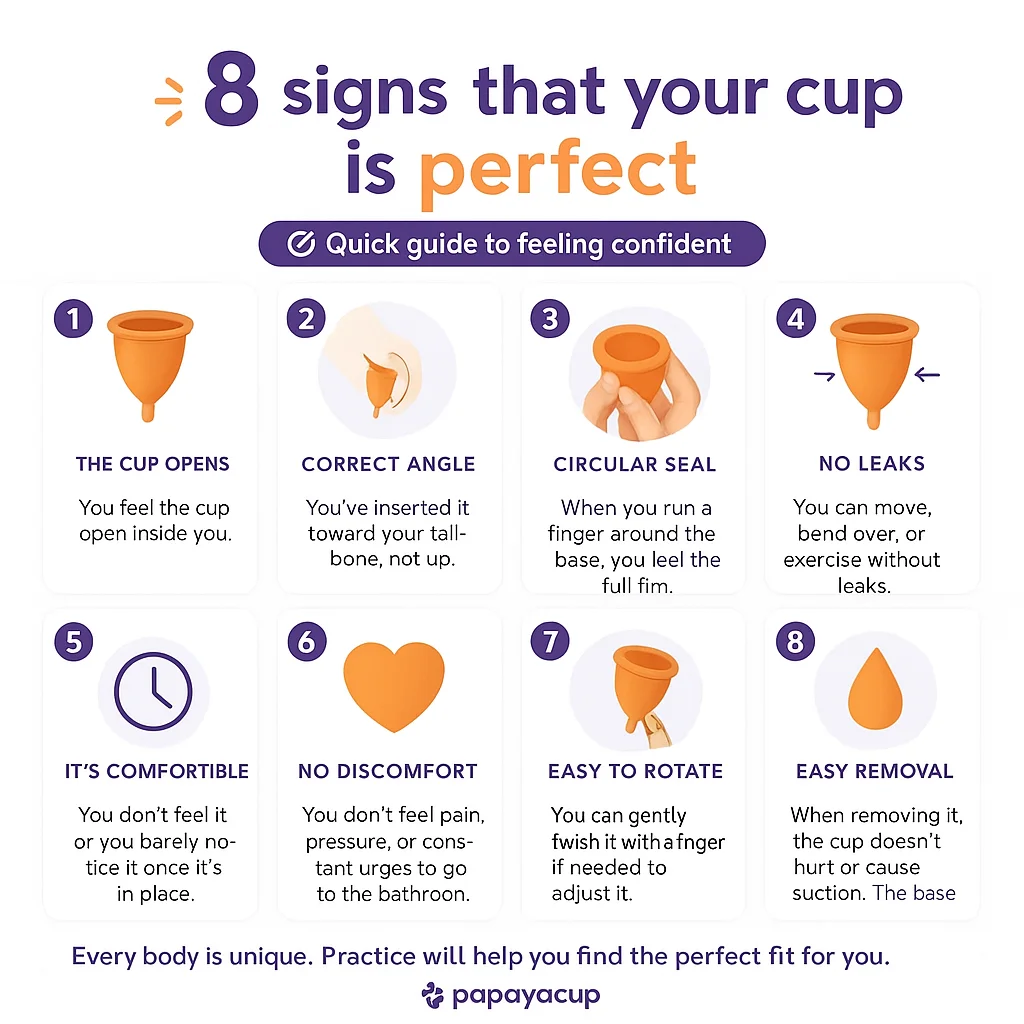
| What you feel | Cup well placed | Cup poorly placed | What to do |
|---|---|---|---|
| Shape to the touch | Round and firm | Flattened or with lumps | Twist 360° and push the edge to fully open |
| Physical sensation | You don’t feel it | Pressure or discomfort | Remove and reinsert adjusting position or size |
| Leaks | No leaks in 8–12h | Constant spotting | Check the seal; it may be a size issue |
| Stem position | Inside the canal | Protruding and rubbing | Insert the cup higher or trim the stem |
| Pull test | Resistance when pulling | Slides easily | The vacuum has not been created; twist and repeat the check |
| Removal | Smooth when pinching | Very difficult or painful | Relax, pinch higher up, zigzag movements |
| Movement during the day | Stays in place | Moves or drops | Try a firmer model for intense activities |
| Sleeping with it | No leaks all night | Spotting when you get up | Insert just before going to bed and check the seal |
Common Issues and How to Solve Them
It’s completely normal to have doubts or small difficulties at first. We’ve all been there. Here are the most common problems along with their direct solutions.
Doesn't fit well
If you feel that the cup isn't going in easily, it’s likely that you’re not relaxed enough or that the fold isn’t right. Try changing the fold, using a little water as a lubricant (never oil, as it can damage the silicone), or changing your position.
Carmen was very frustrated with insertion at first. She discovered that if she squatted and took three deep breaths before starting, the insertion was completely different. "It’s all in your head," she told me. Now she’s the first to recommend the cup to her students.
Discomfort or pressure
If you feel pressure once it’s in, it may be that the cup hasn’t fully opened or that it’s too low. Try moving it a bit, twisting it, or gently pushing it up. If discomfort persists, it could be that the size isn’t right or that your cervix is lower than normal. You can find more information in our article about discomfort with the menstrual cup.
Difficulty removing
The cup cannot get lost inside you: the vagina has an end. If you find it hard to remove, relax, squat, and push with your pelvic muscles to lower the cup a bit. Then pinch the base, break the seal, and gently pull.
According to a review published in The Lancet (2019) with over 3,000 users, the learning curve for the cup is overcome in most cases during the first two cycles. Keep at it!
If the stem is too short, the PapayaDisc may be an easier alternative to remove — also check the size guide for the menstrual disc.
Key Tips for Inserting the Cup Pain-Free
The experience with the cup should always be comfortable and pain-free. If you feel discomfort, it’s a sign that something isn’t quite right — and there’s a solution.
Sofía told us that at first, she felt a little pain during insertion. She tried several folds until she discovered that the 7-fold was perfect for her anatomy. Since then, zero discomfort. "The cup completely changed how I experience my period," was her conclusion after a year of using it.
- Relaxation above all: vaginal muscles tense up with stress. Take a deep breath before inserting. The shower is a good place to practice the first few times.
- Experiment with folds: try the C-fold, punch-down fold, and 7-fold. Every body is different.
- Water lubrication: moisten the edge of the cup before inserting. Never use oil-based lubricants.
- Comfortable position: standing with one foot elevated, squatting, or sitting — whatever works best for you. ```
- Always check the seal: run your finger around the base and make sure it is completely round.
- Don't insert it too high: the cup sits lower than a tampon. The stem should be just inside the vaginal canal.
- Patience and practice: at PapayaCup, we've seen that 80% of those who say "the cup isn't for me" use it perfectly by their third cycle.
Frequently asked questions about how to properly insert the menstrual cup
How do I know if the cup is fully open?
Insert a finger and feel around the base of the cup: you should feel that it is completely round or oval, without any folds. If you notice any part folded, gently twist it or push it a little higher and pull down slightly. Sometimes a slight "pop" or suction sound indicates that it has opened correctly.
Should I feel the cup once it's inserted?
No. If the cup is properly placed, you shouldn't feel it at all. If you feel discomfort, pressure, or a foreign body sensation, it’s likely that it hasn’t fully opened, is too low, or that the size is not right.
What if it doesn't create a seal?
If the cup doesn't create a seal, you will have leaks. To check, once inserted, gently pull on the stem: if you feel resistance, the seal is made. If not, try twisting the cup or pushing it a little more to ensure it fully unfolds.
Can I sleep with the cup in?
Yes, absolutely. In fact, this is one of the great advantages: you can wear it for up to 12 hours straight, allowing you to sleep all night without worrying about leaks. Just make sure it’s sealed properly before going to bed.
What if I have leaks?
Leaks are the clearest sign that the cup is not positioned correctly. The most common causes are that it hasn’t fully opened, is misaligned, or that the size is incorrect. Review the steps, ensure it creates a seal, and if leaks persist, check our size guide.
Is it safe to use the menstrual cup?
Yes, completely. Medical-grade silicone cups are free from harmful substances and are biocompatible. A review in The Lancet (2019) with over 3,000 users confirmed that they are a safe and sustainable alternative. The SEGO also endorses their use.
How do I choose the right size?
The size depends on your age, whether you have had vaginal births, the height of your cervix, and the heaviness of your flow. At PapayaCup, we have size S (light-moderate flow, no vaginal births) and L (heavy flow and/or after vaginal births). Check our detailed size guide.
How often should I empty the cup?
You can wear it for 8–12 hours depending on your flow. It's common to empty it 2–3 times a day. On the first days of your cycle with heavy flow, you might need to empty it every 4–6 hours. Once a day is enough with boiling water to disinfect it; for the rest of the times, cold water and neutral soap are sufficient.
Where can I buy the PapayaCup?
You can buy the cup directly from our online store. The price is around €20–25, with a lifespan of up to 10 years. We ship throughout Spain with a guarantee and personalized support included.
Ready to take the step?
Discover the PapayaCup menstrual cup
You now know exactly how to check that your cup is properly positioned. The next step is to have the perfect cup for you: certified medical silicone, up to 12 hours of protection, and personalized support included.
See the PapayaCup menstrual cup →Certified medical silicone · Guarantee included · Shipping throughout Spain