



Women’s intimate health: everything you need to know
16 de April de 2026
Why does your period hurt? Causes and how to relieve it
17 de April de 2026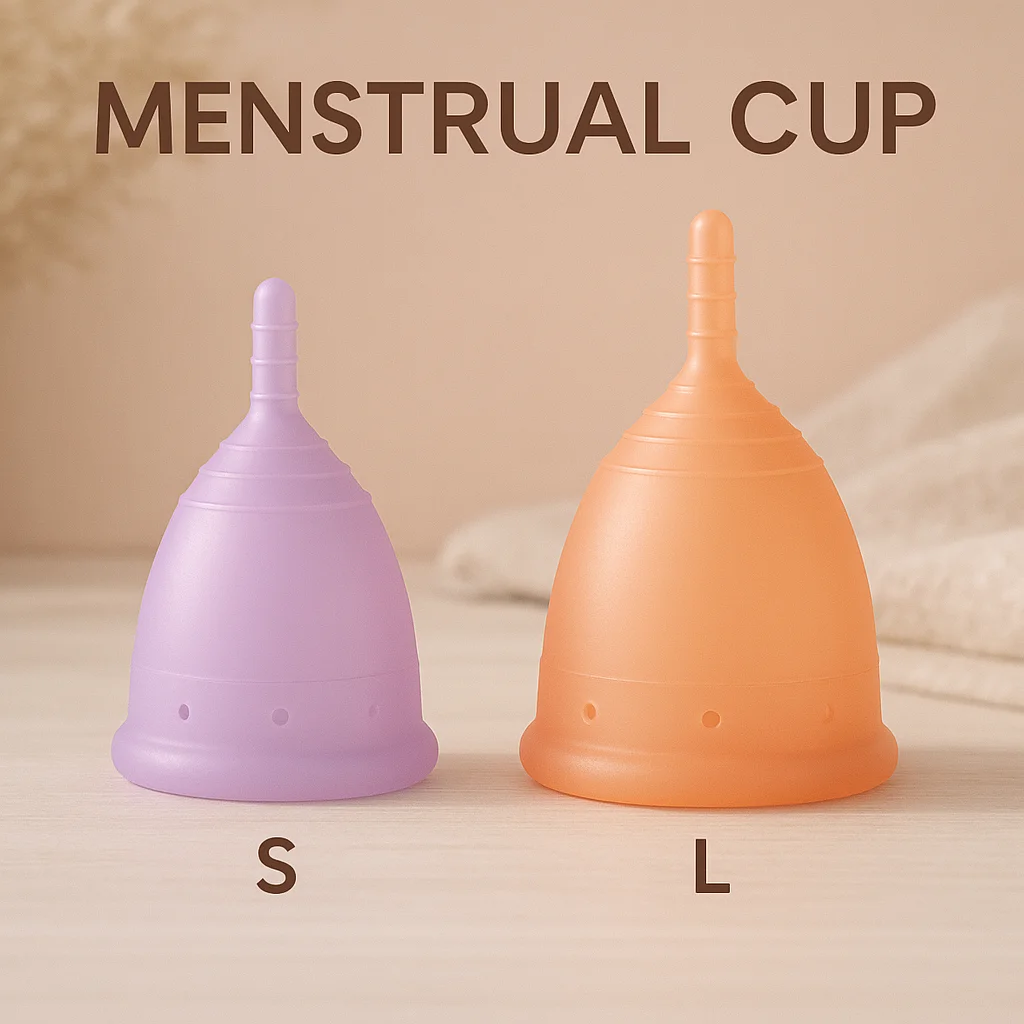
Choosing the right menstrual cup depends on three factors: the height of your cervix, your flow amount, and your level of physical activity. This guide helps you find the perfect cup.
If you've been thinking about taking the plunge or already have a cup at home that just isn't working well, the problem probably isn't the cup itself: it's that no one has explained how to truly choose it. Here, we do it straightforwardly.
Key factors for choosing a menstrual cup: cervix, flow, and activity
Before focusing on the brand or price, there are three things that determine whether a cup will fit well with your body:
1. The height of your cervix
The cervix is the "ceiling" of your vagina. Its height varies from person to person and even changes throughout the cycle. This matters because a cup that is too long can be uncomfortable or may not stay in place, and one that is too short can be difficult to remove.
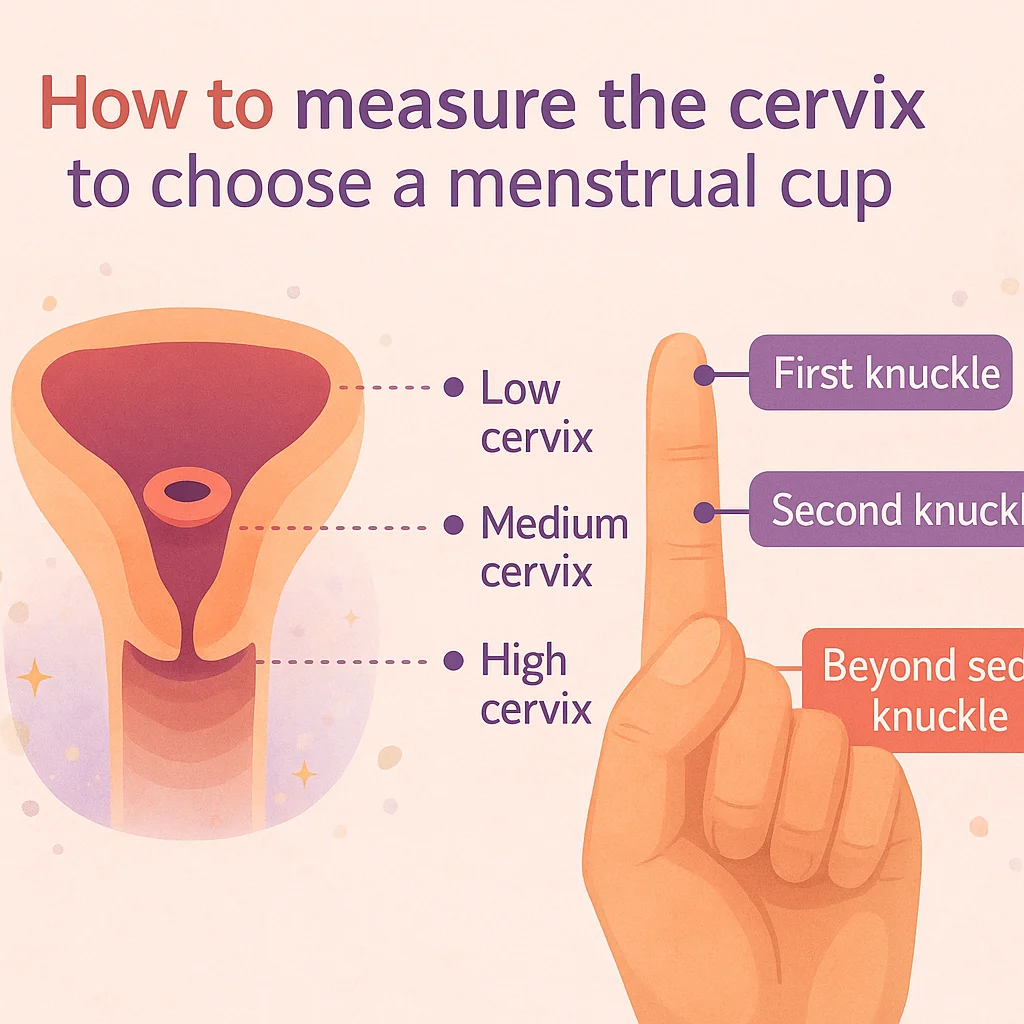
How to measure your cervix at home: Wash your hands well, sit down or place one foot on the toilet seat, and insert your index finger into your vagina until you feel a texture similar to the tip of your nose. The distance your finger travels indicates the height:
- Up to the first knuckle: low cervix
- Up to the second knuckle: medium cervix
- Beyond the second knuckle: high cervix
If you have doubts, the PapayaCup size guide walks you through measuring it correctly step by step.
2. Your flow amount
Do you change your pad or tampon every hour or two hours on the first days? That’s heavy flow. Can you go four or five hours without any issues? Moderate flow. Knowing this helps you choose a cup with the right capacity and understand how many hours you can wear it without needing to empty it.
3. Your level of physical activity
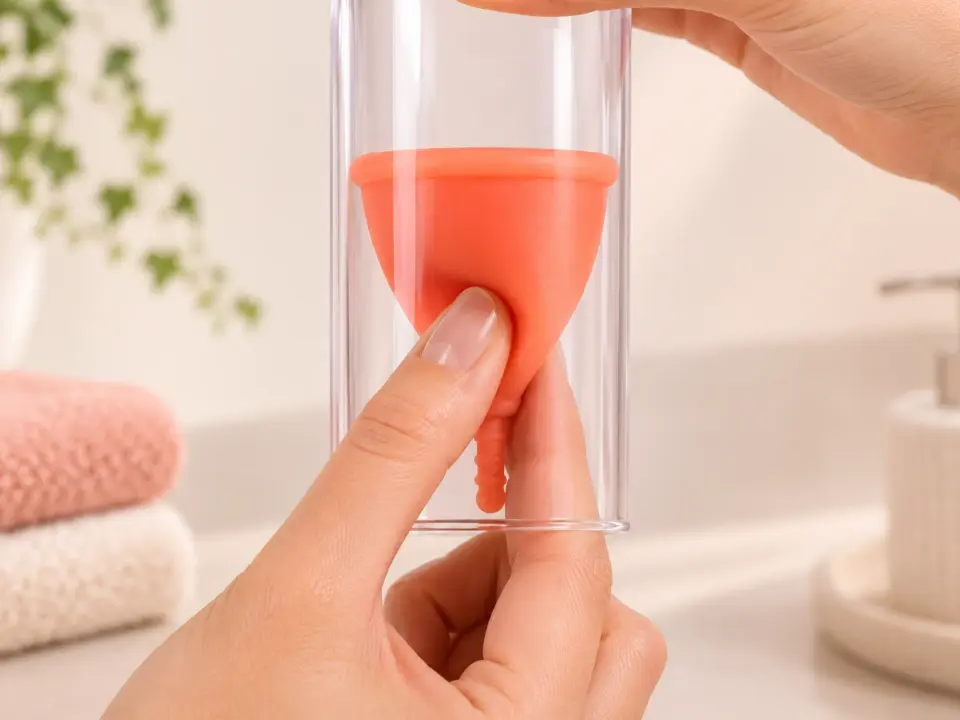
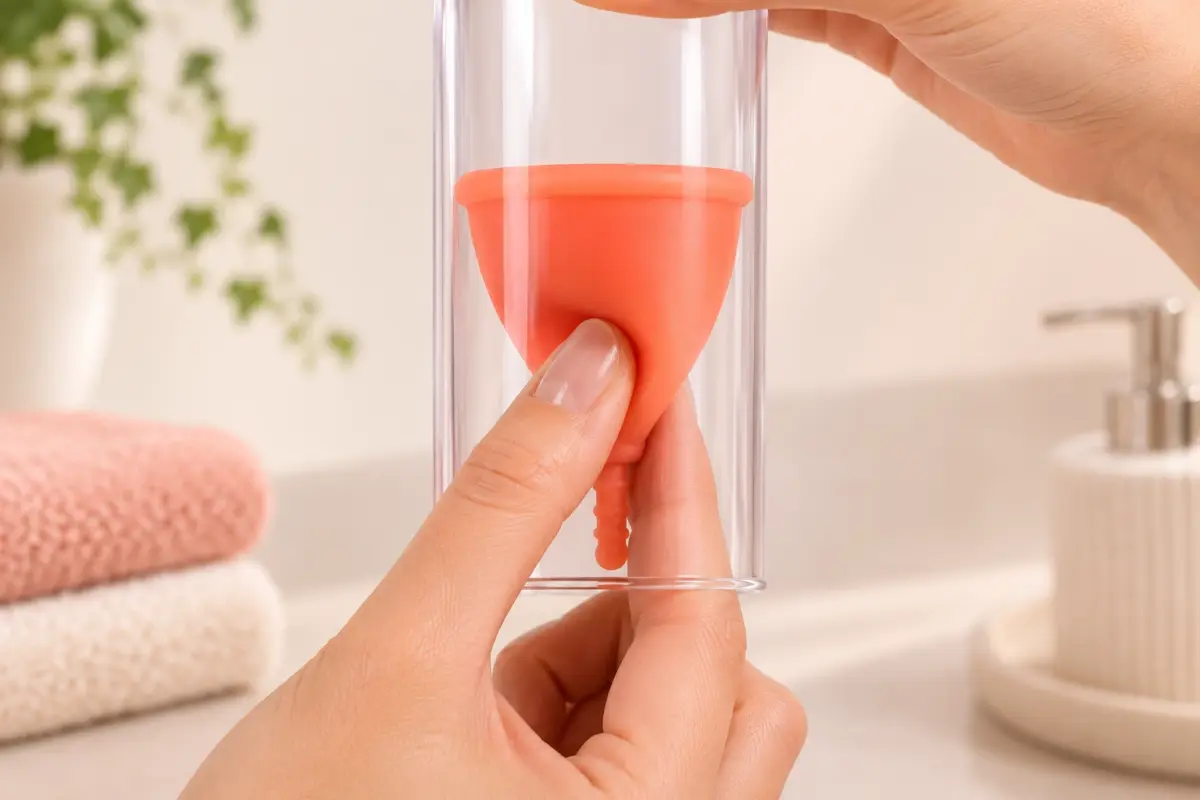
People who engage in a lot of sports, especially high-impact exercises or core workouts, often notice more abdominal pressure. In these cases, a firmer cup tends to stay better in place. If you lead a more sedentary lifestyle or practice yoga, Pilates, or other low-impact disciplines, a softer cup may be more comfortable.
Menstrual cup size chart
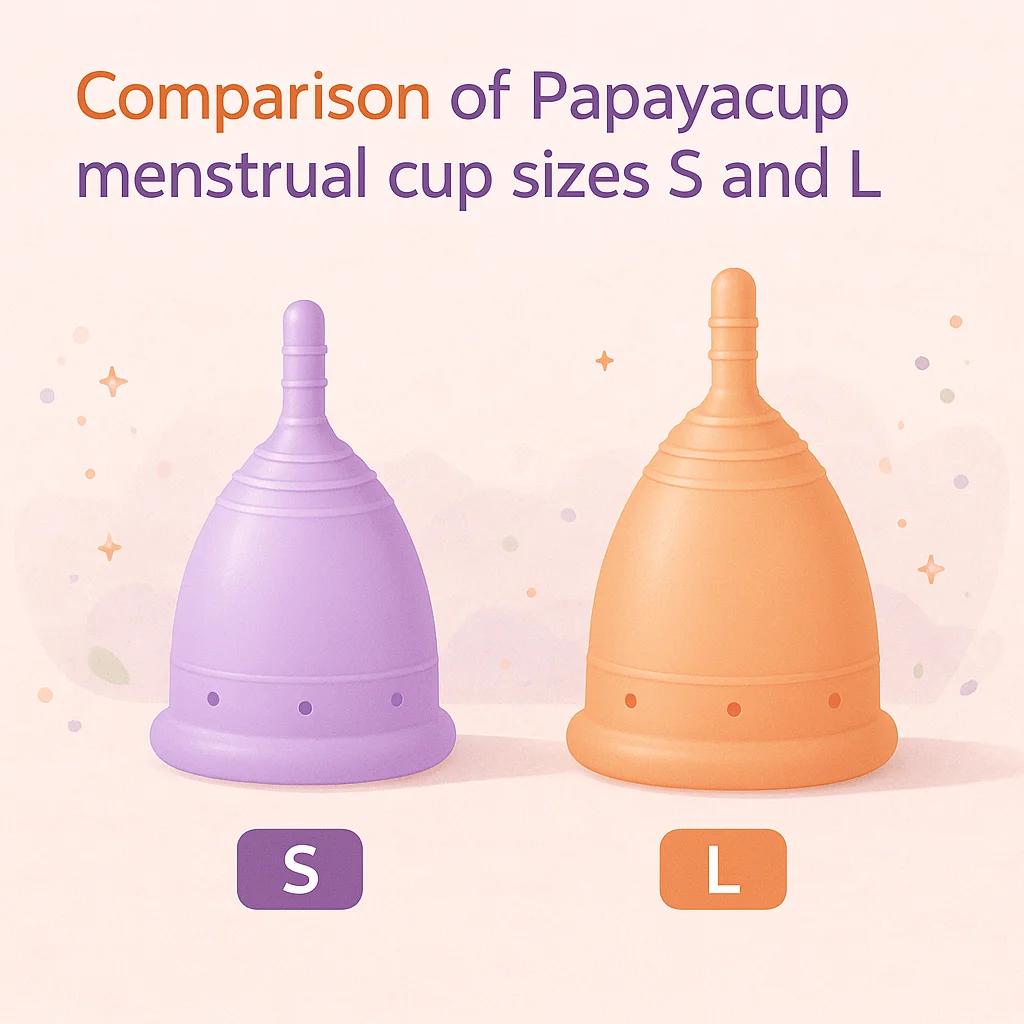
At PapayaCup, you will find two sizes designed to fit different anatomies and needs:
Size | Ideal for |
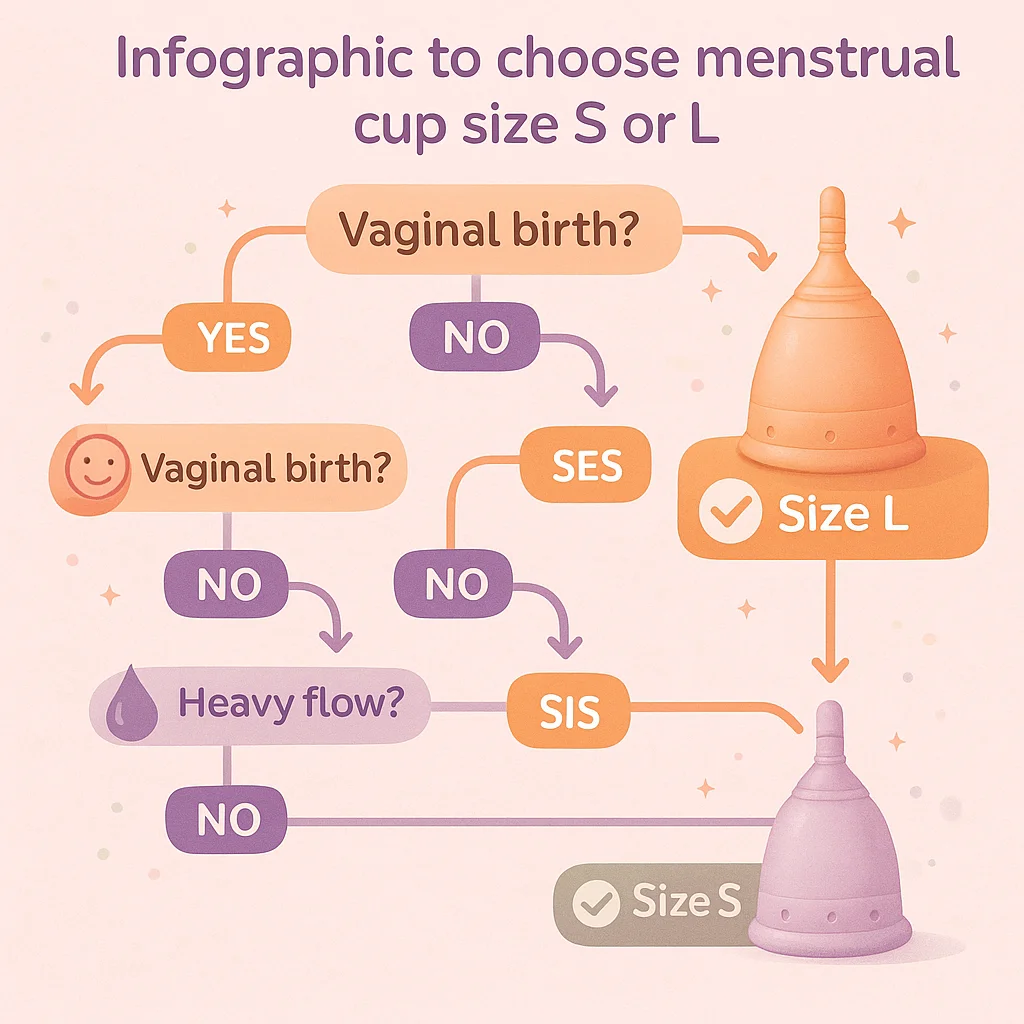
S | Low or medium cervix, light or moderate flow, no vaginal births |
L | High cervix, heavy flow, after a vaginal birth |
Important note: Age is not the only factor nor the most determining one. A 25-year-old with a vaginal birth may need an L, and a 40-year-old without children can perfectly use an S. The cervix and flow dictate.
Soft cup vs firm cup: which one do you need
The firmness of the cup (also called hardness) is one of the most overlooked factors that makes a significant difference in day-to-day use.
Soft menstrual cup
Soft cups fold easily, making them comfortable to insert and wear for hours. They are a good option if:
- You have a sensitive bladder or feel pressure when using tampons
- You engage in low-impact activities
- You are a beginner and prefer to start with something more flexible
- You have a more relaxed pelvic floor
The potential drawback: in some individuals, they may open with less force, which can cause small leaks if not positioned perfectly.
Firm menstrual cup
Firm cups open more easily on their own when inserted, making them very secure in terms of leak-proofing. They are the favorite option for those who:
- Engage in high-impact sports (running, crossfit, swimming)
- Have a more toned pelvic floor
- Have had issues with other cups that closed inside
The potential drawback: if you have a sensitive bladder, they may apply a bit more pressure.
Materials: medical silicone vs TPE
When looking for a menstrual cup, you will mainly find two materials:
Medical silicone
This is the standard reference. Medical silicone is inert (does not react with the body), does not absorb odors or bacteria, and withstands sterilization with boiling water well. With proper care, a medical silicone cup can last many years. The PapayaCup user manual explains in detail how to clean and store it correctly.
TPE (thermoplastic elastomer)
TPE is cheaper to produce and is used in some very low-priced cups. It is more porous than silicone, which means it can retain more odors over time and requires more careful cleaning. It does not withstand high temperatures as well, so it cannot always be sterilized by boiling.
Practical conclusion: If you are going to invest in a cup for the coming years, medical silicone is the safest and most durable option.
Cup for beginners: what to look for
If this is your first menstrual cup, there are a few things that make the learning curve much easier:
- Manageable stem or pull tab. A long stem makes it easier to remove at first when you are still getting the hang of it. Many cups allow you to trim it once you get used to it.
- Medium firmness. Not too soft (hard to open inside) and not too rigid (uncomfortable to insert). A middle ground is ideal for learning the technique.
- Clear instructions. It may seem obvious, but not all brands include a detailed user guide. The PapayaCup instruction manual explains the easiest folds to learn —the C fold and the U fold— how to place it, and how to remove it without it being a drama.
You can also consider whether a menstrual cup or a menstrual disc suits you better. The disc is an interesting alternative if you have a low cervix or want more capacity without changing the format too much. The menstrual disc manual tells you everything you need to know.
Conclusion: find your cup and take the step
Choosing the menstrual cup that’s right for you isn’t complicated if you know what to look for. Knowing your cervix height, understanding your flow, and considering your physical activity is all you need to make a good decision.
If your cervix is low or your flow is light, size S is your starting point. If you’ve had vaginal births, have heavy flow, or a high cervix, size L will fit much better. And if you still have doubts after reading this, the PapayaCup size guide is there exactly for that: so you don’t have to guess.
Frequently asked questions about how to choose your menstrual cup
Insert a clean index finger into the vagina during menstruation (the cervix lowers slightly on those days). Note where you reach: if to the first knuckle, the cervix is low; if to the second, medium; if beyond, high.
It depends on your cervix, your flow, and whether you’ve had vaginal births. Size S for low or medium cervix and light or moderate flow without vaginal births; size L for high cervix, heavy flow, or after a vaginal birth.
If you do impact sports or have a toned pelvic floor, opt for a firmer cup. If you have a sensitive bladder or lead a more relaxed lifestyle, a soft cup may be more comfortable.
After a vaginal birth, size L is usually recommended, although it always depends on the individual. PapayaCup's WhatsApp support is especially helpful in these cases.
Yes. There are no medical contraindications for teenagers to use a menstrual cup, regardless of whether they have had sexual relations or not. Generally, size S is recommended to facilitate learning.