



Period, menstrual cup, and high-performance sports
18 de May de 2026
First Time Using a Menstrual Cup: Beginner’s Guide
29 de June de 2026
Premenstrual syndrome (PMS) affects one in three women. Premenstrual dysphoric disorder (PMDD) is less common but much more debilitating. Confusing them is not a minor mistake: it has real consequences on how you treat yourself, how others treat you, and how long you may suffer without knowing why.
In this article, you will find a clear and honest comparison between the two: what truly distinguishes them, how to know which one affects you, and when it makes sense to seek professional help.
Inhaltsverzeichnis
- PMS PMDD Difference: Complete Comparison, Real Pros and Cons
- Quick Comparison Table: PMS PMDD Difference
- Detailed analysis of each option in PMS PMDD difference
- Which to choose based on your case? (PMS PMDD difference)
- Our final recommendation on PMS PMDD difference
- Frequently Asked Questions about PMS PMDD Difference
- Because tough days shouldn’t also have protection problems
⚕️ This article is for informational purposes and does not substitute for medical consultation. Always consult your gynecologist with any questions.
PMS PMDD Difference: Complete Comparison, Real Pros and Cons
There is a question that many women ask themselves at some point in their fertile life: Is what I feel before my period normal, or is it something more? The PMS PMDD difference is not always evident, as both share symptoms, the same timing in the cycle, and often the same silence surrounding them.
Premenstrual syndrome (PMS) affects one in three women. Premenstrual dysphoric disorder (PMDD) is less common but much more debilitating. Confusing them is not a minor mistake: it has real consequences on how you treat yourself, how others treat you, and how long you may be suffering without knowing why.
In this article, you will find a clear and honest comparison between the two: what truly distinguishes them, how to know which one affects you, and when it makes sense to seek professional help.
Sara, 31 years old, becomes a different person a few days before her period each month. She cries without really knowing why, struggles to get up in the morning, and argues with her partner over things that would seem irrelevant under other circumstances. Her doctor mentioned PMS. A friend brought up PMDD. She has been wondering for three years if they are the same.
Quick Comparison Table: PMS PMDD Difference
Before diving into details, here is the essence of the pmdd difference table that separates both disorders. If you recognize yourself in the PMDD column, keep reading — we will explain what to do with that information later.
| Criterion | PMS (Premenstrual Syndrome) | PMDD (Premenstrual Dysphoric Disorder) |
|---|---|---|
| Prevalence | 20–40% of women of childbearing age | 3–8% of women of childbearing age |
| Predominant Symptoms | Mild physical (bloating, breast tenderness, fatigue) and emotional symptoms | Intense emotional symptoms (extreme irritability, deep sadness, severe anxiety) |
| Impact on Daily Life | Mild-moderate — bothersome but you can continue your routine | Severe — interferes with work, relationships, and social life |
| When It Appears | Days before menstruation, disappears with the period | Days before menstruation, disappears with the period (same pattern, greater intensity) |
| Diagnosis | Clinical, symptom tracking | Requires specific DSM-5 criteria and prospective tracking of at least 2 cycles |
| Usual Treatment | Lifestyle changes, supplements, pain relievers | May require antidepressants (SSRIs), psychological therapy, and specialized follow-up |
| Does It Require a Specialist? | Not always, though it is advisable to consult | Yes — essential |
The key to the PMDD comparative difference is not just in the name: it’s in the intensity, in how those days completely change you, and in whether or not you can maintain your normal life. A person with PMS may be in a worse mood; a person with PMDD may be unable to go to work.
Detailed analysis of each option in PMS PMDD difference
Understanding each disorder well is the first step to knowing what’s happening to you. Many women spend years thinking that what they feel is "normal for their period" when in reality they have the right to a diagnosis and treatment.
Symptoms and hormonal origin
Both PMS and PMDD occur during the luteal phase of the cycle — the days from ovulation to the start of menstruation — and disappear when the period arrives. This pattern is what differentiates them from other mood disorders.
The exact cause is not entirely clear, but current research points to an increased sensitivity to fluctuations in progesterone and estrogen, not to abnormal hormone levels. A clinical review published in Journal of the Turkish-German Gynecological Association (2021) confirms that both PMS and PMDD are characterized by symptoms that appear during the luteal phase and remit with menstruation, and that sex steroids along with neurotransmitters play a central role in their origin.
In PMS, the most common symptoms are:
- Abdominal bloating and fluid retention
- Sensitivity or pain in the breasts
- Fatigue and difficulty concentrating
- Mild mood changes: irritability or sadness
- Premenstrual headache or migraine
In PMDD, emotional symptoms become the central focus:
- Intense sadness or feelings of hopelessness
- Extreme anxiety or tension, feeling "on edge"
- Severe irritability or anger that can lead to conflicts
- Difficulty concentrating that prevents working or studying
- Notable changes in appetite or sleep
- In severe cases, suicidal thoughts (all the more reason to seek professional help)
Duration and intensity: the difference that matters most
PMS usually lasts between 1 and 5 days before the period, and the symptoms are mild enough that you can continue with your life with some extra effort. PMDD can extend up to two weeks (the entire luteal phase) and the symptoms are so intense that many women describe those days as "living inside another person."
Marta, a 34-year-old teacher from Seville, took four years to receive a PMDD diagnosis. "My friends had PMS, and I assumed it was the same but worse. I didn’t understand why they just needed ibuprofen and I was unable to teach those days." When her gynecologist asked her to track her symptoms over two cycles and correlated them with the dates, everything clicked. "It was a huge relief just to know it had a name."
Diagnosis: why symptom tracking is essential
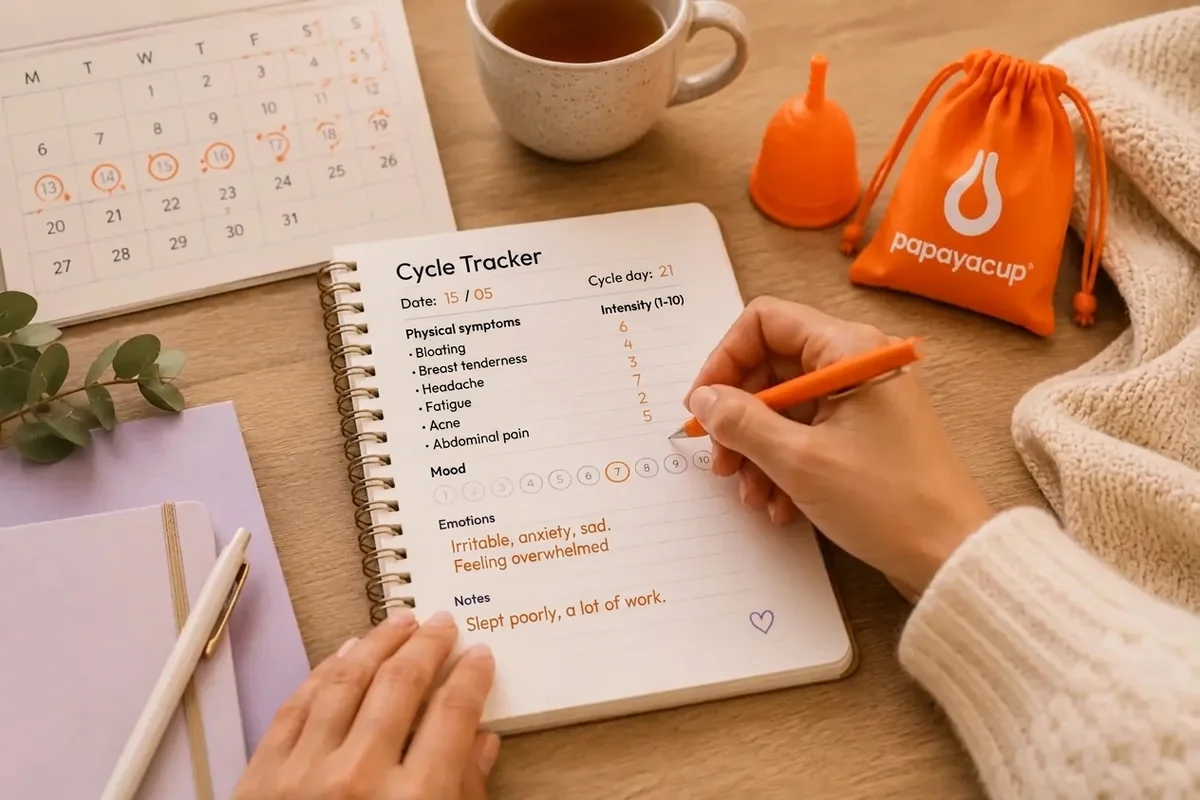
There is no blood test or imaging that diagnoses PMS or PMDD. The diagnosis is based on the prospective symptom tracking — that is, noting day by day how you feel for at least two complete cycles. For PMDD, additionally, the symptoms must meet specific criteria outlined in the DSM-5 (the diagnostic manual of reference in psychiatry).
If you suspect you have PMDD, start by keeping a symptom diary. Record each day of the cycle on a scale from 1 to 10 how you feel emotionally and whether the symptoms interfere with your life. This information is the most valuable tool you can bring to your appointment.
Which to choose based on your case? (PMS PMDD difference)
This is not exactly a choice — it is a diagnosis. But understanding where you stand helps you know what type of help you need and what you can do yourself in the meantime.
If you think you have PMS
If your symptoms are bothersome but do not prevent you from leading your normal life, you are likely dealing with PMS. There are changes that usually help quite a bit:
- Regular exercise throughout the cycle — not just when you feel good. Movement improves mood during the luteal phase consistently.
- Reduce caffeine, alcohol, and sugar in the week leading up to your period. These three elevate cortisol and amplify irritability.
- Magnesium and vitamin B6: there is evidence that supplementation with both reduces PMS symptoms in controlled studies.
- Track your cycle: knowing that those days have a hormonal cause, and are not your true character, already changes how you experience them.
If symptoms are severe and incapacitating
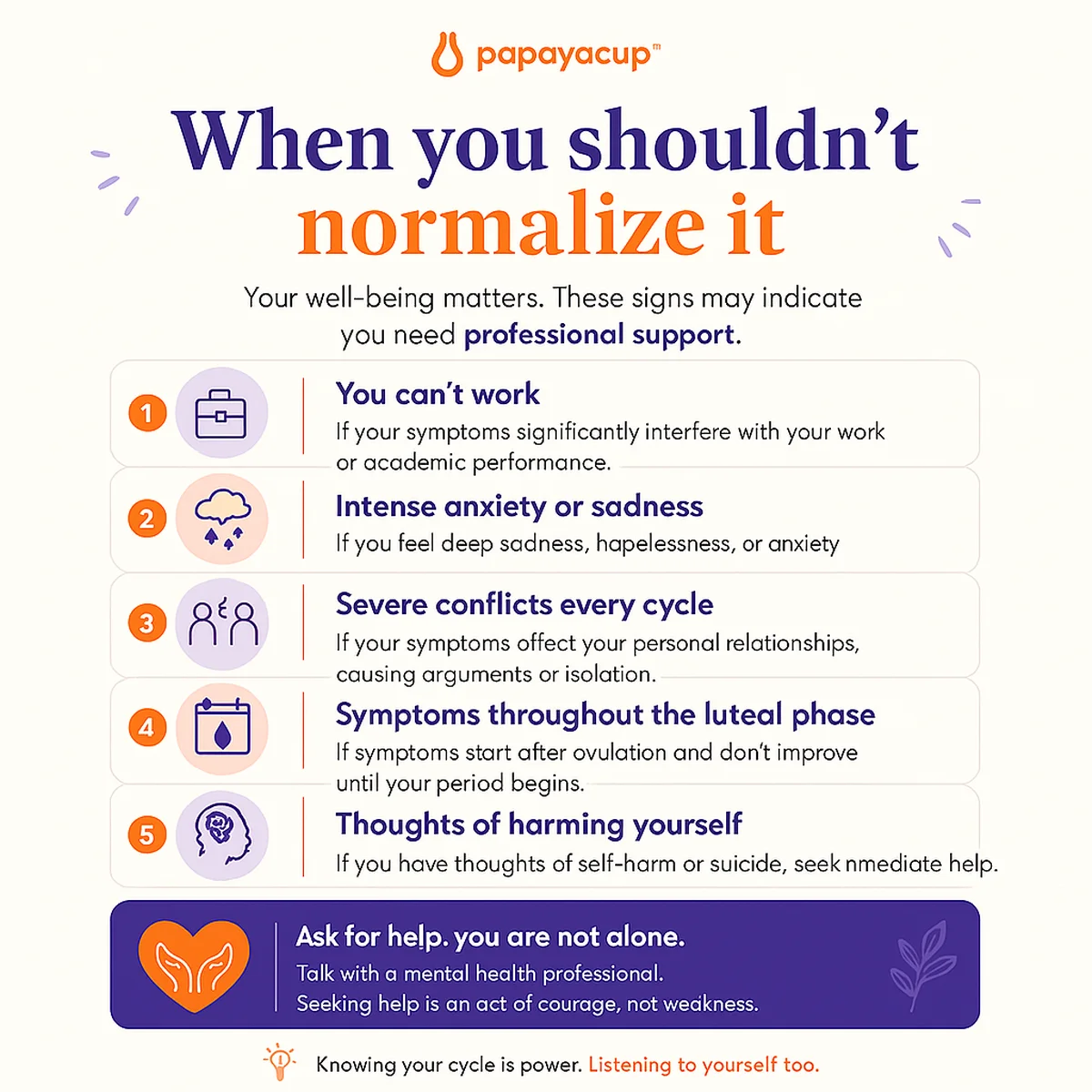
If several days a month you cannot work, maintain relationships, or take care of yourself, the first and most important action is to see your gynecologist or primary care doctor with your symptom diary. PMDD responds well to treatment, especially to SSRIs (selective serotonin reuptake inhibitors), which in many cases are not taken continuously but only during the luteal phase — an option that many patients appreciate positively.
Do not normalize suffering. The pmdd difference what is better between treating it or not treating it is enormous in terms of quality of life.
If you have doubts between the two
The gray area exists. There is severe PMS that closely resembles mild PMDD, and that’s why formal diagnosis is so important. If you are unsure, keep the symptom diary for two cycles and consult. You do not need to self-diagnose — you need to have enough information for a professional to help you properly.
Ana, a 29-year-old dentist from Valencia, spent months thinking she had a generalized anxiety problem until she started correlating her episodes with the phase of her cycle. "I realized that everything was cyclical. Two weeks feeling good, one week feeling off, and one week where I felt like the world was ending. My psychologist suggested I consult my gynecologist, and that’s where the PMDD diagnosis began." Today, she combines medication with adjustments to her professional schedule during the luteal phase. "It has changed my life."
Our final recommendation on PMS PMDD difference
If you've made it this far looking to find out which of the two affects you, it’s likely that you already have a pretty clear intuition. The PMDD difference opinions of thousands of women who have gone through the diagnosis agree on one thing: knowing what you have changes everything, because it shifts from "this is just who I am" to "this is how my body responds to hormonal changes — and there is a solution."
Our recommendation at Papayacup is always the same: track, consult, and do not normalize suffering. PMS is very common and has effective management tools. PMDD is less frequent, more intense, and requires professional attention — but it also has treatment, and that treatment works.
And regarding the practical management of your cycle: if the days with the worst symptoms are already hard enough internally, the last thing you need is for menstrual protection to cause problems externally. The Papayacup menstrual cup is inserted, forgotten for up to 12 hours, and doesn’t require you to think about it when your energy is focused elsewhere — it’s exactly what you need on those days. If you also experience bloating or abdominal sensitivity, you’ll want to read our guide on why the belly bloats during your period and how to relieve it.
The cup that doesn’t bother you
Up to 12 hours without thinking about your period.
Exactly what you need on those days.
- ✓ Certified medical silicone — safe and soft
- ✓ No chafing, no dryness, no constant changes
- ✓ Forgotten for up to 12 hours — even on heavy flow days
- ✓ Saves between €1,000 and €2,000 over your menstrual life
- ✓ Warranty included and personalized support
Or visit papayacup.com to see all products
Frequently Asked Questions about PMS PMDD Difference
Menstrual cup or tampon: which is better for days with PMS or PMDD?
The menstrual cup is the favorite option for those with intense premenstrual symptoms, precisely because you don’t have to keep checking it. It can hold up to 12 hours without needing to be emptied, it’s discreet, doesn’t chafe, and doesn’t require you to be in "management" mode when your energy is already occupied elsewhere. The tampon is more well-known and easier to start with, but its need for frequent changes can be an extra burden just on the days when you need it the least. In the long run, the cup is also more economical and generates much less waste.
Is the menstrual cup more sustainable than other alternatives?
Yes, by far. A medical-grade silicone menstrual cup like the one from PapayaCup lasts between 5 and 10 years. In that same time, a person using tampons or pads generates approximately 1,000 to 1,500 units of plastic waste. The cup avoids all that. Additionally, being reusable, its carbon footprint over its lifespan is significantly lower. It is undoubtedly the most sustainable option on the market.
How much do I save with the menstrual cup?
A menstrual cup costs between 20 and 30 euros and lasts up to 10 years. In that same time, spending on tampons and pads ranges from 1,000 to 2,000 euros depending on flow and products used. The real savings are between 900 and 1,800 euros for each cup. If you have PMS or PMDD and are already spending on other products to manage symptoms, reducing spending on menstrual protection is one of the simplest ways to alleviate the financial burden of your cycle.
Is the menstrual cup hygienic if I have PMS or PMDD symptoms?
Absolutely, as long as you clean it properly. Medical-grade silicone is a non-porous material that does not harbor bacteria or odors between uses if sterilized correctly (just boil it at the beginning and end of each cycle and clean it with water and mild soap with each emptying). On days with the worst premenstrual symptoms, having protection that doesn’t require constant attention is a huge advantage. If you have any active vaginal infection, consult your gynecologist before using it.
Can I bathe or exercise with the cup during PMS days?
Yes, without any problem. You can swim, run, practice yoga, or train with the cup in place — it’s designed to withstand any type of movement once properly positioned. Additionally, moderate exercise is one of the most recommended strategies to reduce PMS symptoms, so having protection that doesn’t hold you back is especially useful. The cup does not absorb water, is not noticeable from the outside, and does not require you to change your workout routine.
Your cycle, your choice
Because tough days shouldn’t also have protection problems
Now you know the difference between PMS and PMDD — and you know that both have solutions. The next step is to have menstrual protection that doesn’t add work just when you least want it: up to 12 hours without changes, certified medical silicone, and no complications. At PapayaCup, we help you choose yours with personalized attention included.
See the PapayaCup menstrual cup →Certified medical silicone · Warranty included · Shipping throughout Spain