




Understanding irregular period: What’s behind it and how you can better estimate your cycle again
13 de December de 2025
Bloating with your period: why it happens and how to relieve it step by step
26 de January de 2026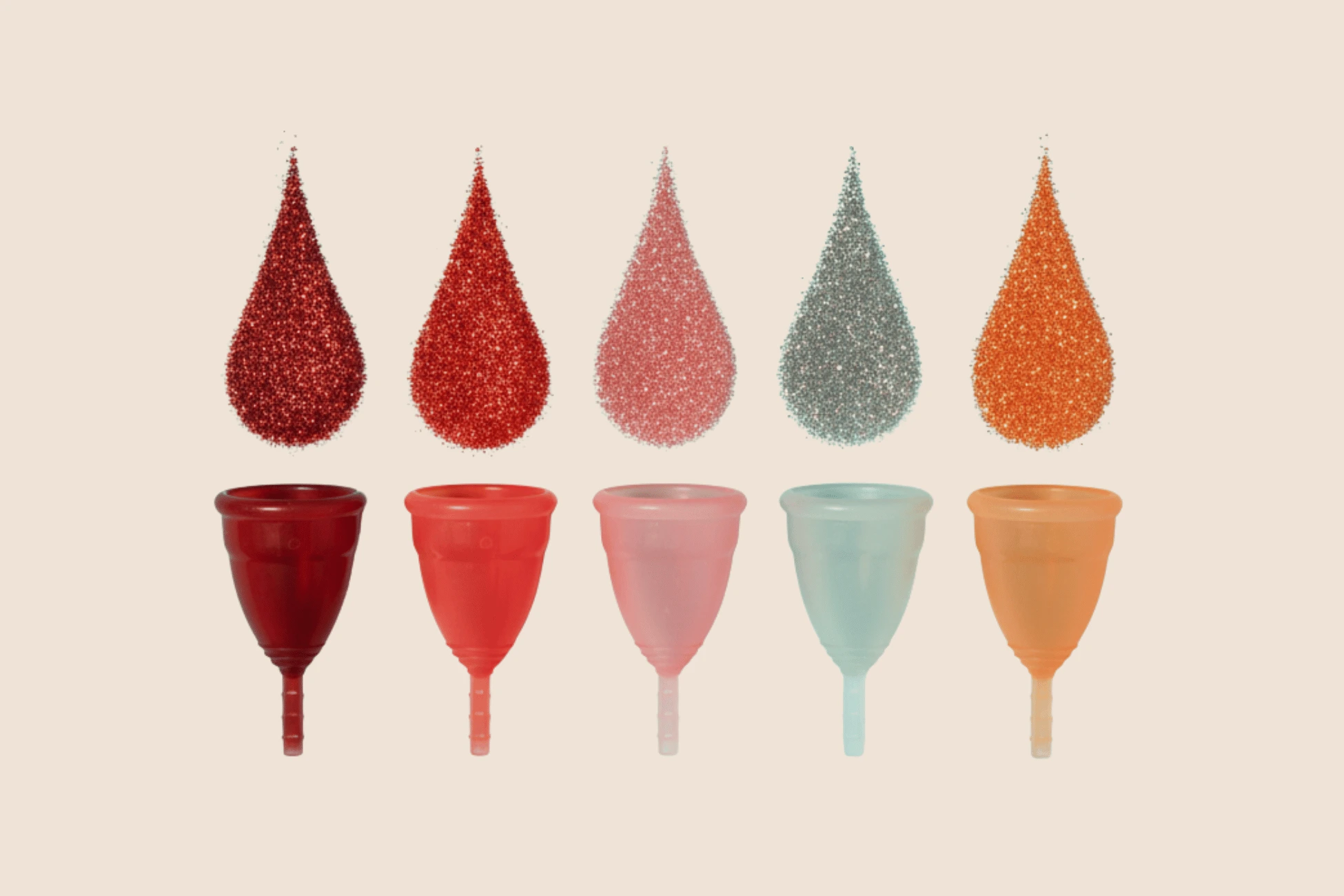
The color of your menstrual blood can reveal a lot about your body. In this article, you’ll learn why menstrual blood can look so different, which colors are normal, and when it may be wise to seek medical advice.
Inhaltsverzeichnis
- Why your menstrual blood doesn’t look the same every month
- What menstrual blood is really made of
- What the color of your menstrual blood can indicate
- Overview of the most common period colors
- Dark, light, brownish, or pink – what each period color means
- What the consistency of your menstrual blood can reveal
- How menstrual blood changes throughout the female cycle
- Menstrual products & body awareness: how menstrual cups or menstrual discs can help
- How your lifestyle can influence the color of your menstrual blood
- Conclusion: your body is speaking to you – and you’re allowed to listen
- Dark, light, brownish, or pink – what each period color means
- What the consistency of your menstrual blood can reveal
- How menstrual blood changes throughout the female cycle
- Menstrual products & body awareness: how menstrual cups or menstrual discs can help
- How your lifestyle can influence the color of your menstrual blood
- Conclusion: your body is speaking to you – and you’re allowed to listen
- FAQ: your questions about menstrual blood and its colors
- Note
Why your menstrual blood doesn’t look the same every month
You may have noticed it before: your menstrual blood doesn’t look the same every month. On some days it’s bright red and fluid, on others more brownish or thicker. These differences are normal and reflect how dynamic the female cycle is. Hormones, the buildup of the uterine lining, and the intensity of your bleeding work together in every cycle, creating your very own pattern.
Three factors in particular determine what menstrual blood looks like:
- How quickly the blood leaves the body
- How much oxygen it comes into contact with along the way (oxidation)
- How much tissue from the uterine lining is shed
According to studies, menstrual blood clearly differs from venous blood. It contains mucus, bacteria from the vaginal flora, and shed cells from the uterine lining. This affects color, smell, and consistency. Many users report that using menstrual cups or menstrual discs gives them a much better sense of their own cycle and helps them notice changes more quickly.
Source: PubMed
What menstrual blood is really made of
Menstrual blood is a complex bodily secretion. It consists of:
- Blood
- Mucus and cervical fluid
- Tissue from the uterine lining
- Natural bacteria from the vaginal flora
- Lower amounts of hemoglobin than in venous blood
You may have noticed that the blood sometimes appears clumpy. These clumps are called clots and form when blood briefly coagulates in the uterus. This can be normal, especially during a heavier period. By using a menstrual cup or menstrual disc, you can clearly observe color and consistency and better interpret changes.
What the color of your menstrual blood can indicate
The color of menstrual blood changes over the course of your period. Each color can indicate a specific phase of the cycle, hormonal changes, or the speed of blood flow. Most color variations are normal and not a cause for concern.
Oxidation plays an important role. When blood stays in the body longer, it reacts with oxygen and becomes darker.
Overview of the most common period colors
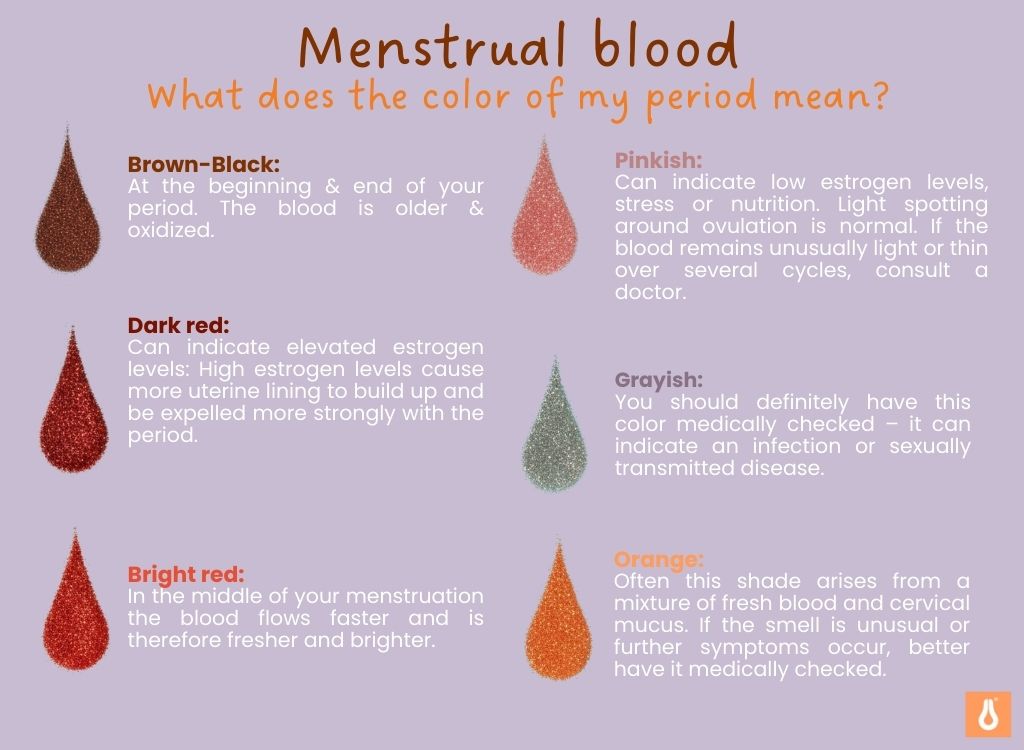
To give you a quick overview, you’ll find the most important colors and their possible causes here.
Dark, light, brownish, or pink – what each period color means
Brown or black menstrual blood:
Brown to black blood is older blood that has stayed in the body longer and oxidized. Many users experience this color:
- at the beginning or end of the period
- after days of lighter bleeding
- when small remnants of the uterine lining are released
Papaya tip: Brown menstrual blood can sometimes look like brown discharge. Careful observation over two to three cycles can help you recognize patterns.
Dark red menstrual blood:
This color often occurs when blood flows more slowly or when the uterine lining has built up more strongly. Higher estrogen levels can favor these tones.
Bright red menstrual blood:
Bright red usually means the blood is fresh and leaves the body more quickly. Many people see this color during the heaviest days of menstruation.
Pink-colored blood:
A mixture of blood and cervical mucus can create pink tones. These may occur with:
- low estrogen levels
- stress
- intense physical exertion
- spotting around ovulation
If pink blood occurs frequently, a gynecological consultation may be worthwhile.
Orange-colored blood:
This happens when blood mixes with cervical mucus. If an unusual odor is present as well, it may indicate an infection and should be medically evaluated.
Grayish blood:
This color is rare and should always be examined by a doctor. It may indicate:
- infections
- bacterial vaginosis
- sexually transmitted infections.
What the consistency of your menstrual blood can reveal
Clumpy blood
Clumps are coagulated blood and are usually normal. Many users notice them during heavier periods.
Please pay attention to:
- unusually large clots
- very heavy bleeding
- circulatory problems
In such cases, medical support is advisable.
Watery menstrual blood
A thinner period can occur:
- at the beginning or toward the end of bleeding
- with hormonal fluctuations
- due to changes in nutrition and stress
If the consistency changes significantly multiple times, keeping a cycle journal can be helpful.
How menstrual blood changes throughout the female cycle
The menstrual cycle is dynamic and full of nuances. Each phase brings its own colors and consistencies. Typical patterns include:
- Start of the cycle: brown to dark red
- Main days: bright to medium red
- Around ovulation: possible pink spotting
- End: brown to black
Menstrual products & body awareness: how menstrual cups or menstrual discs can help
Using a menstrual cup or PapayaDisc allows you to directly observe color, consistency, and blood volume. Many users report that this helps them develop a deeper understanding of their cycle.
Commonly mentioned benefits include:
- greater clarity about color and progression
- less dryness
- comfortable wear
- sustainable and reusable
The PapayaCup and PapayaDisc are made of medical-grade silicone and are pH-neutral.
How your lifestyle can influence the color of your menstrual blood
Many people think the color of menstrual blood depends solely on the hormonal cycle. In reality, nutrition, stress, movement, and sleep can also influence your period. Not because they are “right” or “wrong,” but because your body responds to everything happening in your life. Many users report that small everyday changes are noticeable, for example in the amount of clots or the intensity of colors.
Studies show that metabolism, inflammation, physical activity, and stress regulation can play a role in the menstrual cycle.
Source: German Society for Gynecology and Obstetrics (DGGG)
Here you’ll find an overview of how certain factors can influence the color and consistency of menstrual blood.
Factor | Possible effect on menstrual blood | Why the body reacts this way |
Nutrition | Very light or very dark blood possible | Mineral deficiencies, high sugar intake, or low iron can affect circulation and hormones |
Hydration | Thinner, lighter blood | Adequate fluid intake makes blood less viscous and allows it to flow more easily |
Stress level | Spotting or pink blood possible | Stress affects estrogen and progesterone and can trigger breakthrough bleeding |
Physical activity | Stronger flow, fewer clots | Promotes circulation, stabilizes metabolism, and reduces prostaglandins |
Sleep & recovery | More balanced flow, regular cycle | Good sleep quality supports hormonal balance |
Warmth & self-care | More relaxed, more regular flow | Warmth relieves uterine tension and supports circulation |
These influences are not a standard for how your period “should” look. Rather, they help you understand why your menstrual blood may sometimes look different from the previous cycle. You’re allowed to approach your body with curiosity and observe how it responds.
Conclusion: your body is speaking to you – and you’re allowed to listen
The color of your menstrual blood is much more than a visual detail. It shows where you are in your cycle, how quickly the blood is flowing, and which hormonal processes are active. Many changes are normal and part of your body’s natural rhythm.
By observing your menstrual blood, you get to know yourself better. You may notice patterns, or you may be surprised by new nuances. All of this is part of bodily self-awareness. And if something feels unfamiliar or raises concerns, you can seek medical support at any time.
Every period is unique, and your body deserves attention, rest, and trust. Step by step, you can discover what it’s trying to tell you.
Dark, light, brownish, or pink – what each period color means
Brown or black menstrual blood:
Brown to black blood is older blood that has stayed in the body longer and oxidized. Many users experience this color:
- at the beginning or end of the period
- after days of lighter bleeding
- when small remnants of the uterine lining are released
Papaya tip: Brown menstrual blood can sometimes look like brown discharge. Careful observation over two to three cycles can help you recognize patterns.
Dark red menstrual blood:
This color often occurs when blood flows more slowly or when the uterine lining has built up more strongly. Higher estrogen levels can favor these tones.
Bright red menstrual blood:
Bright red usually means the blood is fresh and leaves the body more quickly. Many people see this color during the heaviest days of menstruation.
Pink-colored blood:
A mixture of blood and cervical mucus can create pink tones. These may occur with:
- low estrogen levels
- stress
- intense physical exertion
- spotting around ovulation
If pink blood occurs frequently, a gynecological consultation may be worthwhile.
Orange-colored blood:
This happens when blood mixes with cervical mucus. If an unusual odor is present as well, it may indicate an infection and should be medically evaluated.
Grayish blood:
This color is rare and should always be examined by a doctor. It may indicate:
- infections
- bacterial vaginosis
- sexually transmitted infections.
What the consistency of your menstrual blood can reveal
Clumpy blood
Clumps are coagulated blood and are usually normal. Many users notice them during heavier periods.
Please pay attention to:
- unusually large clots
- very heavy bleeding
- circulatory problems
In such cases, medical support is advisable.
Watery menstrual blood
A thinner period can occur:
- at the beginning or toward the end of bleeding
- with hormonal fluctuations
- due to changes in nutrition and stress
If the consistency changes significantly multiple times, keeping a cycle journal can be helpful.
How menstrual blood changes throughout the female cycle
The menstrual cycle is dynamic and full of nuances. Each phase brings its own colors and consistencies. Typical patterns include:
- Start of the cycle: brown to dark red
- Main days: bright to medium red
- Around ovulation: possible pink spotting
- End: brown to black
Menstrual products & body awareness: how menstrual cups or menstrual discs can help
Using a menstrual cup or PapayaDisc allows you to directly observe color, consistency, and blood volume. Many users report that this helps them develop a deeper understanding of their cycle.
Commonly mentioned benefits include:
- greater clarity about color and progression
- less dryness
- comfortable wear
- sustainable and reusable
The PapayaCup and PapayaDisc are made of medical-grade silicone and are pH-neutral.
How your lifestyle can influence the color of your menstrual blood
Many people think the color of menstrual blood depends solely on the hormonal cycle. In reality, nutrition, stress, movement, and sleep can also influence your period. Not because they are “right” or “wrong,” but because your body responds to everything happening in your life. Many users report that small everyday changes are noticeable, for example in the amount of clots or the intensity of colors.
Studies show that metabolism, inflammation, physical activity, and stress regulation can play a role in the menstrual cycle.
Source: German Society for Gynecology and Obstetrics (DGGG)
Here you’ll find an overview of how certain factors can influence the color and consistency of menstrual blood.
Factor | Possible effect on menstrual blood | Why the body reacts this way |
Nutrition | Very light or very dark blood possible | Mineral deficiencies, high sugar intake, or low iron can affect circulation and hormones |
Hydration | Thinner, lighter blood | Adequate fluid intake makes blood less viscous and allows it to flow more easily |
Stress level | Spotting or pink blood possible | Stress affects estrogen and progesterone and can trigger breakthrough bleeding |
Physical activity | Stronger flow, fewer clots | Promotes circulation, stabilizes metabolism, and reduces prostaglandins |
Sleep & recovery | More balanced flow, regular cycle | Good sleep quality supports hormonal balance |
Warmth & self-care | More relaxed, more regular flow | Warmth relieves uterine tension and supports circulation |
These influences are not a standard for how your period “should” look. Rather, they help you understand why your menstrual blood may sometimes look different from the previous cycle. You’re allowed to approach your body with curiosity and observe how it responds.
Conclusion: your body is speaking to you – and you’re allowed to listen
The color of your menstrual blood is much more than a visual detail. It shows where you are in your cycle, how quickly the blood is flowing, and which hormonal processes are active. Many changes are normal and part of your body’s natural rhythm.
By observing your menstrual blood, you get to know yourself better. You may notice patterns, or you may be surprised by new nuances. All of this is part of bodily self-awareness. And if something feels unfamiliar or raises concerns, you can seek medical support at any time.
Every period is unique, and your body deserves attention, rest, and trust. Step by step, you can discover what it’s trying to tell you.


Note
PapayaCup does not replace medical advice. This article is intended for educational purposes and aims to help you better understand your body. If you experience symptoms, feel unsure, or notice unusual changes, please consult your doctor or healthcare professional.