



Odor during period: When is it normal and when should you look into it?
26 de January de 2026
Sleeping on Your Period Without Staining: Tricks for the Whole Night
26 de January de 2026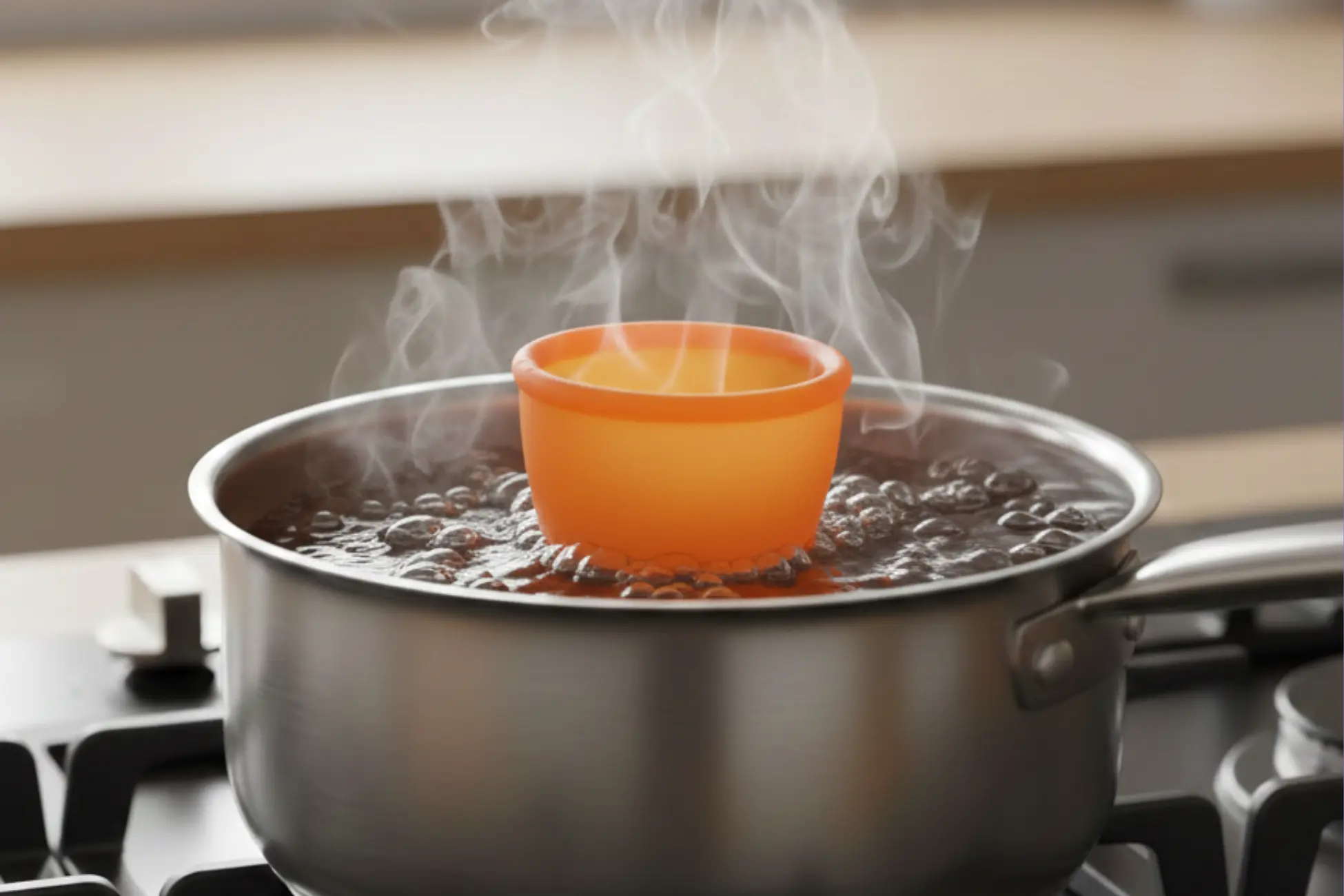
Boiling the menstrual cup is a crucial step to keep it free from bacteria and other microorganisms. This process ensures proper hygiene and prevents risks to intimate health. In this article, you will learn how to safely boil the menstrual cup without damaging it, ensuring its durability.
Inhaltsverzeichnis
- What does boiling the menstrual cup mean?
- Why is it important to clean the menstrual cup?
- Step-by-step guide to safely sterilize the menstrual cup
- Additional tips from the community
- How often should I boil the menstrual cup?
- Common mistakes to avoid
- How to keep the menstrual cup in the best condition
- FAQ: Menstrual cup care
What does boiling the menstrual cup mean?
Boiling the menstrual cup involves fully submerging it in water that has reached the boiling point. This process sterilizes the cup, eliminating microorganisms that could cause irritation or infections if the cup is reused without thorough cleaning. It is one of the most recommended techniques to keep the cup in optimal condition, although there are other cleaning alternatives.
Why is it important to clean the menstrual cup?
Although it is not necessary to boil the cup after every use, doing it at the beginning and end of each cycle helps to keep it in perfect condition. This process ensures that any possible bacteria or fungi are eliminated, reducing the risk of vaginal infections or irritations.
Step-by-step guide to safely sterilize the menstrual cup
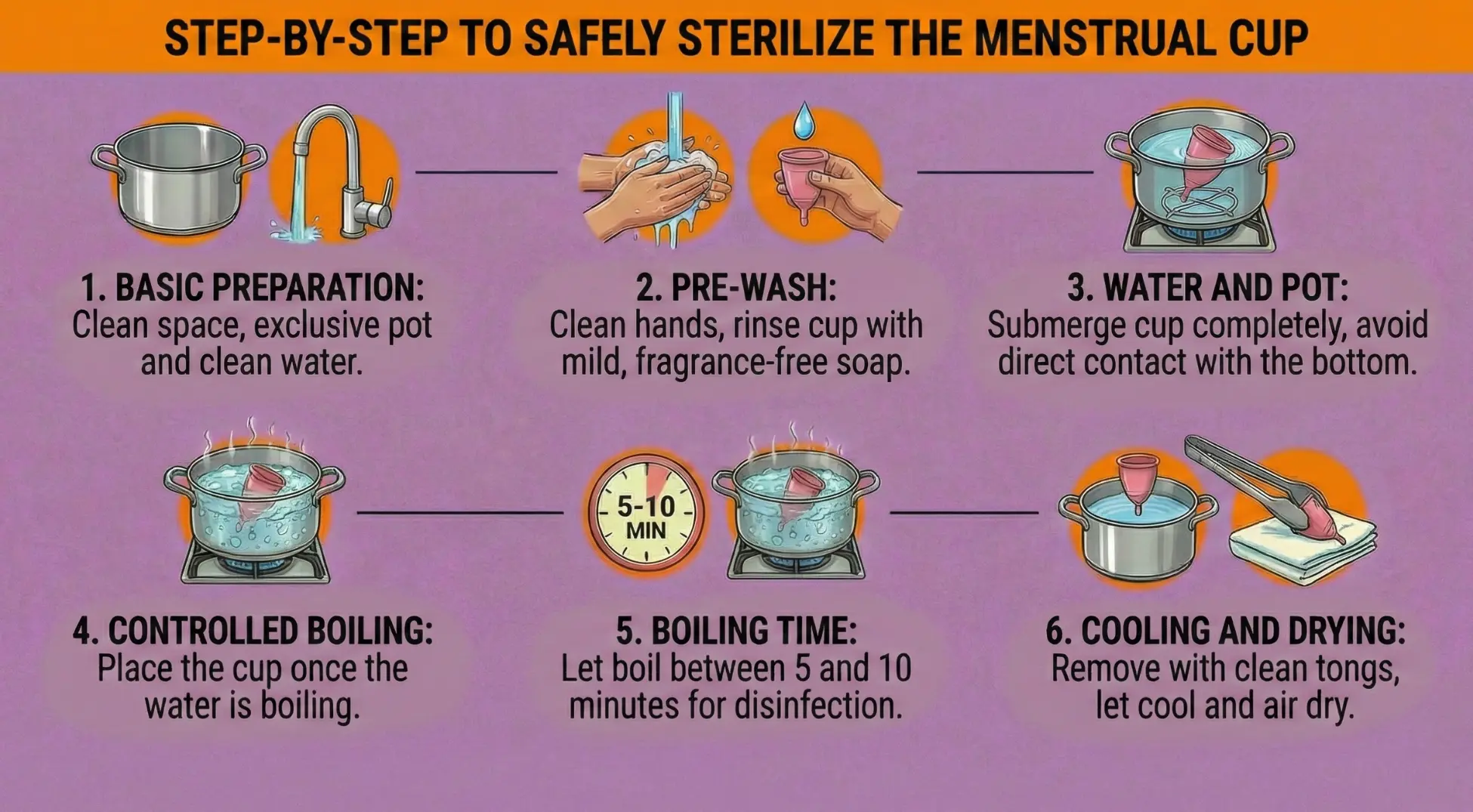
1. Basic preparation
Before you begin, make sure you have a clean space and the appropriate materials for the process. Use a pot exclusively for this purpose and clean water. If you're using a menstrual disc instead of a cup, you might find our step-by-step guide helpful for getting started.
2. Pre-wash
Always wash your hands with water and soap before handling the cup. Then, rinse it with water and a mild, fragrance-free soap to remove any visible residue and prepare the cup for sterilization.
3. Water and pot
Fill a pot with enough water to completely submerge the cup. If the pot is small, ensure the cup does not touch the bottom directly to avoid burning. Some people use metal utensils or grids to keep the cup floating.
4. Controlled boiling
Bring the water to a constant boil. Once the water is boiling, place the cup inside, ensuring it is completely submerged.
5. Boiling time
Leave the cup in the boiling water for 5 to 10 minutes. This time is usually sufficient for a deep disinfection without deforming the cup material. Boiling it for more than 10 minutes can soften it and reduce its elasticity over time.
6. Cooling and drying
Turn off the heat and let the cup cool in the water. Then, use clean tongs to remove it and place it on a clean surface to dry properly.
Additional tips from the community
In menstrual cup user communities, many share their experiences about caring for the cup:
- You don’t need to sterilize it every time you empty it. During your cycle, simply rinse it with clean water or use menstrual cup wipes if you're away from home.
- Be cautious of excessive boiling. Some users claim that boiling the cup excessively over time can soften the silicone. Therefore, they prefer to boil it only at the beginning and end of the cycle.
- Alternatives to boiling. If you can't boil the cup for any reason (travel, public bathrooms, etc.), there are steam sterilizers and sterilizing tablets that are also effective.
How often should I boil the menstrual cup?
The most common recommendations from the community and specialized guides are:
- At the start of the menstrual cycle. Boiling the cup before the first use ensures that it is completely clean.
- At the end of the cycle. After using it, clean it before storing it until the next cycle.
- In exceptional situations. If the cup falls on the floor or if you’ve had a vaginal infection, some people prefer to boil it before using it again.
Common mistakes to avoid
- Don’t use harsh products. Avoid using bleach, alcohol, or scented products, as they can damage the material of the cup.
- Don’t store it without drying. After boiling, make sure the cup is completely dry before storing it in a container. Don’t store it in airtight containers without allowing it to breathe.
- Check the manufacturer’s instructions. Some cups have specific recommendations regarding boiling time or sterilization methods. It’s important to follow the manufacturer’s guidelines to avoid damaging the product.
How to keep the menstrual cup in the best condition
Sterilizing the menstrual cup is a simple but essential step to maintain its hygiene and ensure its durability. While it’s not necessary to boil it after every use, doing so at the beginning and end of each cycle is an excellent way to eliminate bacteria and fungi, preventing risks to your intimate health. Remember to follow the proper cleaning and storage recommendations to ensure your menstrual cup stays in optimal condition.
Ready to take care of your intimate health naturally? Discover the PapayaCup menstrual cups, made with safe and comfortable materials.
FAQ: Menstrual cup care
Some people use the microwave with a suitable container, but not all manufacturers recommend it. Boiling in water is usually more even and effective.
No, it only needs to be sterilized at the beginning and end of the cycle. Between uses, washing it thoroughly with water and mild soap is sufficient.
Sterilizing it for more than 10 minutes can cause the cup material to soften and lose elasticity, which may reduce its lifespan.
After sterilizing it, make sure the cup is completely cool and dry before storing it. You can also visually check that there are no blood residues or material buildup.
Yes, steam sterilizers and sterilizing tablets are good alternatives if you cannot sterilize the cup in water. They are practical options for travel or when you don’t have access to a stove.
Yes, you can sterilize it without any problem. However, if there are persistent stains, you can rinse it with cold water before sterilizing to ensure no residue remains.
After sterilizing and drying the cup, store it in a clean, dry place, such as a cotton pouch or a perforated container that allows air circulation. Avoid airtight containers, as they can encourage bacterial growth.