




First period: What it means, how it starts and how you can feel secure
4 de December de 2025
Headache and migraine during period – why they occur and what really helps
10 de December de 2025
Recognize & Understand Hashimoto's Thyroiditis: Symptoms in women (physical & psychological), diagnostic tips, differences from hypothyroidism, nutrition tips, personality changes & influence on the menstrual cycle. Learn how to lead a good life despite Hashimoto's!
Inhaltsverzeichnis
- What is Hashimoto?
- How common is Hashimoto?
- Hashimoto symptoms in women
- Hashimoto Diagnosis: How is Hashimoto's detected?
- Differences from hypothyroidism and hyperthyroidism
- Hashimoto nutrition: What is good for you and what's better avoided?
- Hashimoto and Personality Changes
- Hashimoto and Cycle / Menstruation
- FAQ about Hashimoto Symptoms in Women
- Conclusion: Understanding Hashimoto in Women and Classifying Your Symptoms
- Medical Note
Hashimoto symptoms in women often remain undetected for a long time, yet this autoimmune thyroid disease affects millions of women in Europe alone. In this article, you'll learn concisely and understandably:
- What Hashimoto's exactly is
- How the disease can manifest in women – physically, emotionally, mentally
- How nutrition, cycle and mood are affected
- Which treatment helps and how you recognize your symptoms
- And: What you should avoid if you're affected
An honest, clear guide – for more body understanding and self-determination.
What is Hashimoto?
Hashimoto's thyroiditis, short Hashimoto's, is a chronic autoimmune disease in which your immune system attacks the thyroid. The body produces antibodies against its own thyroid tissue, leading to permanent inflammation. This inflammation increasingly damages the thyroid – it becomes weaker, produces fewer hormones and can no longer fulfill its function long-term.
Typical for Hashimoto's disease is an insidious progression. In the initial phase, there may be a temporary thyroid hyperfunction because stored hormones are released uncontrollably. This phase is also called hashitoxicosis. Later, an underactive thyroid almost always develops – the body receives too few thyroid hormones, which can trigger numerous symptoms.
According to current knowledge, Hashimoto's is not curable but very treatable. The missing hormones are replaced by daily intake of L-thyroxine. With proper adjustment, you can lead a largely normal life with Hashimoto's – it's just important that you recognize the disease early.
How common is Hashimoto?
Hashimoto's thyroiditis is one of the most common autoimmune diseases worldwide – and at the same time the most common cause of hypothyroidism.
Women are particularly affected: Studies show they develop Hashimoto's seven to ten times more frequently than men. According to estimates, about 4 out of 1,000 women in Europe suffer from Hashimoto's – with a rising trend. The actual number is likely much higher since the disease often remains unnoticed for a long time. Some experts assume that up to one in ten women in Central Europe develops Hashimoto's during their lifetime.
The disease typically first appears between the ages of 30 and 50, but can also begin much earlier or later.
Source: onmeda.de
Hashimoto symptoms in women
Hashimoto's manifests a little differently in every woman. That's exactly what often makes diagnosis so difficult. Symptoms can creep in over years and seem insignificant at first glance. Many confuse them with stress, overwhelm or hormonal fluctuations.
Typical are physical changes like fatigue, weight gain, cold sensitivity or hair loss. The psyche also suffers: concentration problems, mood lows and inner restlessness are not uncommon. Many women even say they feel like a different person.
Symptoms often occur in flares – sometimes you feel somewhat stable, then completely held back again. If you recognize several of these signs in yourself, a closer look at your thyroid is worthwhile.
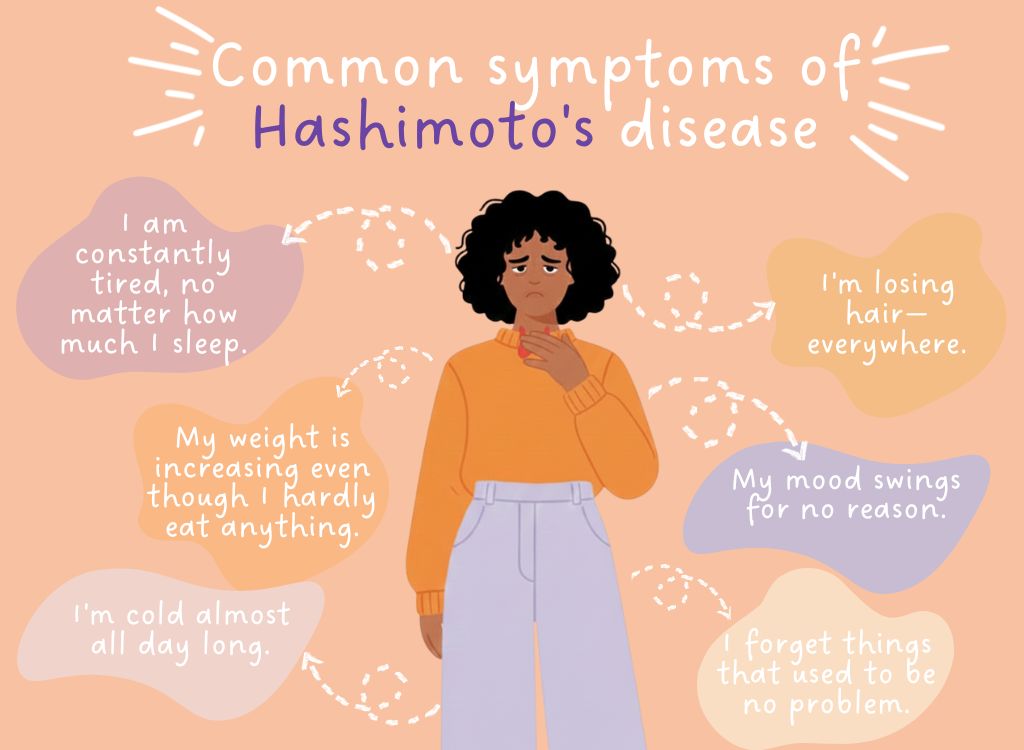
Typical Hashimoto Symptoms at a Glance
Have you been feeling leaden fatigue for a while, gaining weight unintentionally, or feeling emotionally unrecognizable? Then a closer look at your thyroid is worthwhile. In this table, you'll find the most common physical, psychological, and emotional symptoms that women with Hashimoto's thyroiditis repeatedly describe – clearly structured and focusing on the complaints most often mentioned in practice.
Physical Symptoms | Psychological Symptoms | Emotional Symptoms |
Extreme fatigue and exhaustion, even after long sleep | Concentration disorders, memory gaps ("brain fog") | Mood swings, often without clear trigger |
Unexplained weight gain, especially in the abdomen and despite healthy eating | Lack of motivation – even everyday tasks become difficult | Feeling emotionally unstable or "beside yourself" |
Cold sensitivity, constantly cold hands and feet | Forgetfulness, things suddenly slip away from you | Irritability, even over small things |
Hair loss, brittle nails, dry, pale skin | Sleep disorders, difficulty falling or staying asleep despite exhaustion | Inner restlessness, nervousness or latent tension |
Bloated belly, constipation, slow digestion | Depression, sometimes leading to depressive episodes | Anxiety states – diffuse worries without apparent cause |
Low pulse, dizziness, during exertion or at rest | Overwhelm in daily life, even with familiar routines | Loss of libido, coupled with feeling alienated from your own body |
Cycle changes – irregular, heavy or painful periods | Social withdrawal tendencies, the desire to avoid people or situations | Crying spells or sudden emotional breakdowns |
Pressure sensation in the throat, possibly palpable enlargement of the thyroid (goiter or nodules) | Rapid mental fatigue, after conversations, reading or screen work | Feeling of alienation, as if you're "not yourself" |

This overview, of course, does not replace a medical diagnosis but can help you better classify your own observations. If several points seem familiar to you, talk to your doctor about a thyroid check.
Hashimoto Diagnosis: How is Hashimoto's detected?
The Hashimoto diagnosis is often not a straight path. Many women wander through doctor's offices for years with nonspecific complaints. Not infrequently, burnout, stress or depression are initially suspected – the actual cause remains undiscovered. If you recognize yourself in several of the typical symptoms, specifically mention the thyroid to your doctor.
To reliably detect Hashimoto's thyroiditis, several components are needed:
1. Blood test
This is the most important step. The following are checked:
- TSH: Often significantly elevated
- fT3 and fT4: Usually decreased
- TPO antibodies: Mostly strongly elevated (in about 90% of Hashimoto cases)
- TG antibodies: Can also be abnormal
These antibodies indicate that your immune system is working against the thyroid.
2. Ultrasound
Using ultrasound, the doctor examines the structure of the thyroid. Indications of Hashimoto's:
- Often enlarged initially (goiter)
- Later irregular, inhomogeneous, sometimes shrunken
- Clearly inflamed tissue
3. Medical history & symptoms
Your personal course also matters. Common combinations:
- Constant exhaustion
- Weight gain despite healthy eating
- Mood lows or irritability
- Chills, cycle changes, brain fog
Together with abnormal blood values, this creates a clear picture.
Optional: In some cases, a scintigraphy is performed to assess thyroid activity more precisely – but this is not always necessary.
Tip: Hashimoto's often occurs together with other autoimmune diseases – for example:
- Celiac disease (gluten intolerance)
- Type 1 diabetes
- Vitiligo (white spot disease)
If you already have an autoimmune disease, a targeted look at the thyroid is worthwhile and vice versa.
Differences from hypothyroidism and hyperthyroidism
Hashimoto almost always leads to hypothyroidism, but is not the same as "classic" hypothyroidism, as here an autoimmune reaction is the cause. There are also important differences from hyperthyroidism (e.g., Graves' disease).
Hashimoto vs. primary hypothyroidism
In primary hypothyroidism, the thyroid produces too few hormones, e.g., due to iodine deficiency, congenital disorders, or after surgery.
In Hashimoto's, inflammation by the immune system is the cause. Initially, there may even be a temporary hyperfunction (hashitoxicosis) before the thyroid becomes "exhausted" and switches to hypothyroidism.
Diagnostic difference:
- Both show elevated TSH levels and low fT3/fT4
- Only in Hashimoto are additional antibodies detectable in the blood
- The course in Hashimoto's is often more fluctuating
Treatment: In both cases, L-thyroxine is used. In Hashimoto's, additionally, lifestyle (e.g., nutrition) is an important factor.
Hashimoto vs. Graves' disease
Graves' disease is also an autoimmune disease, but with the opposite effect:
Here antibodies overstimulate the thyroid, causing hyperfunction. The symptoms differ significantly:
- Graves': Weight loss, heart palpitations, restlessness, sweating
- Hashimoto: Weight gain, fatigue, cold sensitivity
Rarely, Hashimoto patients can temporarily also experience hyperfunction due to inflammation flares (hashitoxicosis).
Treatment:
- In Graves', hormone production is medically slowed or the thyroid is partially removed
- In Hashimoto, missing hormones are replaced
What about nodules or cancer?
Hashimoto does not mean an increased cancer risk. In ultrasound, benign nodules may become visible, caused by the inflammation. Regular check-ups are sensible, but usually harmless.
Hashimoto's is an independent autoimmune disease that often leads to hypothyroidism but follows a different course than classic hypothyroidism. An accurate diagnosis is crucial to receive the appropriate treatment.
Hashimoto nutrition: What is good for you and what's better avoided?
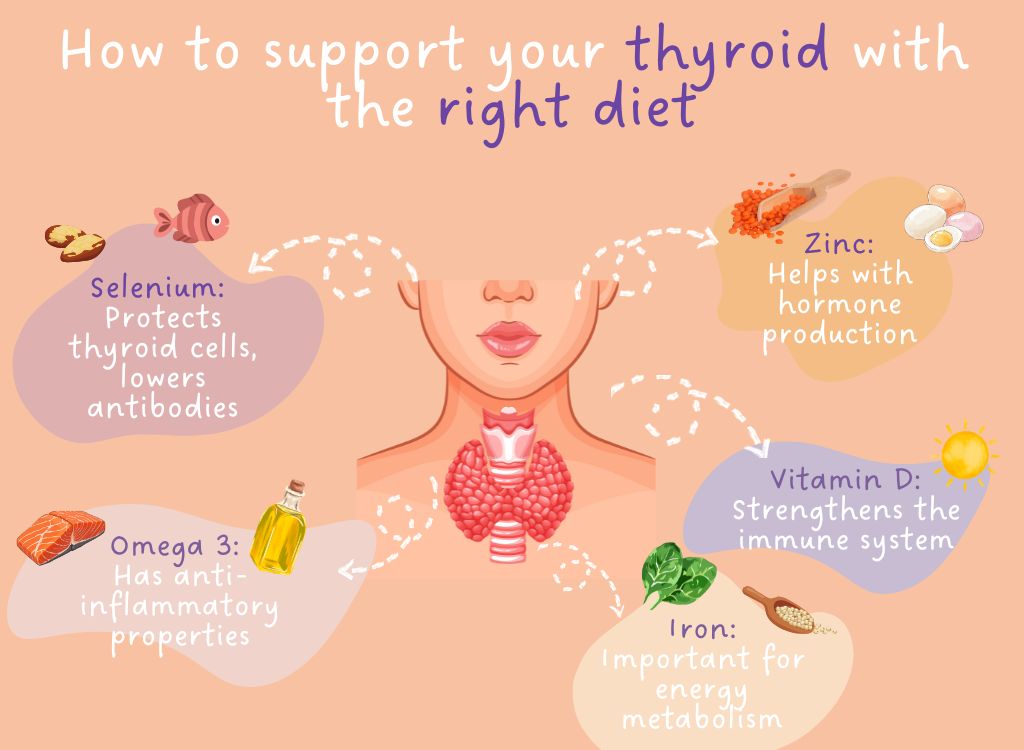
You cannot "eat away" Hashimoto, but you can specifically support your body. An anti-inflammatory diet, selected nutrients and avoiding typical irritants can relieve your immune system and alleviate many symptoms.
What your thyroid really needs now
- Fresh fruits and vegetables: Focus on colorful and diverse – berries, citrus fruits, green leafy vegetables, carrots or pumpkin. They provide antioxidants that can inhibit inflammatory processes in the body.
- High-quality proteins: Fish (especially fatty types), eggs, legumes and lean meat provide you with protein. Omega-3 fatty acids (e.g., in salmon, walnuts, flaxseed oil) additionally act anti-inflammatory.
- Healthy fats: Avocados, olive oil, nuts and seeds provide important building blocks for your hormone balance and cell health.
- Gluten-free grains: Many Hashimoto sufferers benefit from reducing or eliminating gluten. Tolerable alternatives are quinoa, millet, buckwheat or rice.
- Adequate hydration: Water and unsweetened herbal teas help your body excrete metabolic waste and stabilize hormone balance.
- Important nutrients: Pay attention to selenium, zinc, iron, vitamin D and B vitamins. Especially selenium (e.g., 100 µg sodium selenite daily) can reduce autoimmune activity – discuss this with your doctor. A check for iron deficiency is also worthwhile.
What unnecessarily stresses Hashimoto
- Sugar and highly processed foods: Soft drinks, sweets, white flour and ready-made meals promote inflammation, overwhelm the gut and disrupt your energy balance.
- Gluten-containing grains: Wheat, barley and rye can be problematic in Hashimoto's – especially with simultaneous celiac disease or sensitivity. Test whether you feel better without them.
- Dairy products (in case of intolerance): Many react sensitively to lactose or casein. For bloating, skin problems or diarrhea, switching to plant-based alternatives is worthwhile.
- Too much iodine: Iodine is a sensitive issue with Hashimoto's. Excessive amounts – e.g., through seaweed, iodine supplements or excessive iodized table salt – can promote inflammation flares. Stay away from high-dose iodine supplements without medical consultation.
- Alcohol and nicotine: Both promote silent inflammation in the body and can fuel autoimmune processes. Your body comes into better balance when you consciously abstain.
A wholesome, low-inflammatory diet focusing on naturalness, fresh ingredients and few irritants can noticeably alleviate your Hashimoto symptoms. But: Every body reacts differently. Listen to your gut feeling and give yourself time. Changes don't show overnight, but step by step.
Hashimoto and Personality Changes
Can Hashimoto influence your personality? Many women answer that with a clear yes. Thyroid hormones affect the brain, mood and energy – when this finely tuned system gets out of balance, one's own experience often changes as well. Important: These changes are not permanent. Once your levels are well adjusted, your well-being stabilizes again.
Mood and Temperament
Many affected individuals report being emotionally "no longer themselves." Typical changes are:
- Irritability or a low threshold for irritation
- Sadness or melancholy
- sudden mood swings without apparent reason
- increased anxiety or inner restlessness
These feelings are closely linked to hypothyroidism. When the brain lacks hormones, it directly affects the nervous system and emotions.
Motivation and Interests
Hashimoto can slow down your inner drive. What used to be easy suddenly costs more energy. Many women describe:
- social withdrawal tendencies
- the feeling of "not getting anywhere"
- little joy in hobbies or activities
- quick overwhelm
This is not your "true self," but a consequence of hormonal imbalance. With stable levels, the joy of life usually returns.
Cognitive Changes
The typical "brain fog" is a common Hashimoto symptom. It manifests as:
- Forgetfulness
- slower thought processes
- difficulty concentrating
- mistakes that would never have happened before
Especially if you're usually well-organized, this can be very unsettling. The good news: With appropriate therapy, the brain becomes clearer again.
What you should know
Onmeda confirms: Yes, Hashimoto can temporarily lead to personality changes, particularly through mood swings, irritability, or lack of motivation. Once your thyroid hormones are balanced, these changes usually disappear completely.
Empowerment tip
Ask for understanding in your environment. Hashimoto influences your feelings, but you're not at their mercy. Psychological support can also be helpful if mood lows overwhelm you. You don't have to carry this alone.
Hashimoto and Cycle / Menstruation
The thyroid and the menstrual cycle are closely linked. When the thyroid gets out of balance, many women first feel it in their menstruation. Hashimoto can influence several aspects of the cycle.
Irregular Cycle
Hypothyroidism can delay or suppress ovulation. This leads to:
- longer, shorter or irregular cycles
- delayed period
- absent bleeding (amenorrhea)
Thyroid hormones control important processes in the cycle. If they're missing, the rhythm gets disrupted.
Heavier or Changed Bleeding
With Hashimoto, bleeding can:
- be significantly heavier
- last longer
- be accompanied by spotting
Conversely, some women also report a weaker period. Both can be an indication of a thyroid disorder.
More Painful PMS
A frequent companion is estrogen dominance, meaning too much estrogen with too little progesterone. This can intensify PMS:
- Breast tenderness
- water retention
- increased pain sensitivity
- irritability and mood swings
The period itself can also be more painful with Hashimoto – the whole body reacts more sensitively.
Fertility
Hashimoto can make a desire for children more difficult, especially if the hypothyroidism remains undetected. Possible consequences:
- irregular or absent ovulation
- cycle shifts
- increased risk of miscarriage with untreated hypothyroidism
With well-adjusted levels and nutrients like selenium or iron, however, fertility is usually restored. Many Hashimoto patients have healthy children without problems.
Menstrual Products & Cycle Knowledge
If your period is heavier or comes more irregularly under Hashimoto, you need protection you can rely on. Menstrual cups and menstrual discs like PapayaCup or PapayaDisc offer:
- large capacity
- secure hold even with heavy bleeding
- a body-friendly, pH-neutral alternative to tampons
Especially on heavy days, the menstrual cup can give you noticeably more security.
Also cycle tracking helps enormously. If you know which cycle phase you're in, you can much better classify PMS, energy fluctuations and menstrual changes.
Pregnancy and Hashimoto
Many women only learn about their Hashimoto disease during pregnancy, because thyroid levels are routinely checked there. Important to know:
- A well-adjusted thyroid is crucial for a healthy pregnancy.
- Around 7 percent of women develop Hashimoto after birth (postpartum thyroiditis).
- Extreme exhaustion or depressive moods postpartum should always also be checked hormonally.
If you want to get a better feeling for what a Hashimoto flare can feel like, you can find a short, understandable video about it here.
FAQ about Hashimoto Symptoms in Women
Oatmeal is not fundamentally forbidden. It becomes problematic if it contains gluten contamination or binds L-thyroxine in the gut. Therefore, it's best to use gluten-free oats and take your thyroid hormone 30–60 minutes before breakfast. With celiac disease or strong gluten sensitivity, you should avoid oats.
The typical "Hashimoto belly" arises from a slowed metabolism, inflammation-related water retention, hormonal imbalances like increased cortisol and often also from disturbed gut flora. With good adjustment of levels and low-inflammatory diet, belly fat usually improves significantly.
A Hashimoto flare manifests through a sudden intensification of typical symptoms. Many women feel extreme fatigue, mood lows, increased hair loss, skin or digestive problems, and a pressure sensation in the throat. It often feels as if the body is temporarily "shutting down." A flare usually lasts several days to weeks.
Avoid highly processed foods, lots of sugar, white flour, fast food, excessive iodine (e.g., seaweed products) and gluten if you react sensitively to it. Dairy products can also cause problems if you don't tolerate casein well. A natural, low-inflammatory diet with fresh ingredients works best.
Hashimoto directly attacks only the thyroid. However, since its hormones are important for the whole body, the changes indirectly affect the heart, brain, digestion, skin, hair and muscles. The autoimmune reaction itself is exclusively directed against the thyroid.
Avoid strong stress, self-medication or independent dosage changes of your hormones. Crash diets, extreme fasting and excessive sports without recovery also worsen symptoms. Listen to your body, rest during flares and seek support instead of isolating yourself.
Conclusion: Understanding Hashimoto in Women and Classifying Your Symptoms
Hashimoto can disrupt a lot physically, emotionally and hormonally, but you are not at the mercy of this disease. With well-adjusted thyroid levels, appropriate nutrition and conscious management of your energy balance, your condition usually stabilizes noticeably. Many women report that with the right treatment, they feel much more like themselves again.
Because Hashimoto can also affect your cycle, period strength and PMS, you'll find helpful articles on PapayaCup about cycle phases, heavy periods, menstrual pain, PMS as well as our guides to the menstrual cup and menstrual disc. They help you better understand your body and guide you more confidently through challenging days.
If your symptoms change, your period becomes more irregular, or you suspect Hashimoto in yourself, use this knowledge as orientation and not as a reason for worry. Many complaints can be well treated – and you are not alone with this.
Medical Note
We are not doctors. This article serves for education and does not replace medical advice. If you suspect Hashimoto or notice new symptoms, please contact your general practitioner. For further thyroid examinations, an endocrinologist is the right contact. For cycle problems or desire for children, your gynecologist can additionally help. A professional diagnosis is always crucial to find the right treatment for your body.