



Skin Irritation During Menstruation: Common Causes and How to Relieve It
10 de February de 2026
¿How to Know If Your Menstrual Cup or Disc Is the Right Size?
10 de February de 2026
Mood changes before your period are part of the menstrual experience for many people. Irritability, sudden sadness, feeling overwhelmed, or increased emotional sensitivity often appear in the days leading up to bleeding. Although it is a common phenomenon, it is not always easy to understand why it happens or how to manage it without falling into simplifications or stigma.
Inhaltsverzeichnis
- What Are Premenstrual Mood Changes
- Why Mood Changes Appear Before Your Period
- How Premenstrual Mood Changes Manifest
- Premenstrual Stress and Mood Changes: A Direct Relationship
- Strategies to Reduce Premenstrual Stress
- When Mood Changes Interfere with Daily Life
- Breaking the Stigmas Around Mood and Your Period
- Understanding Your Cycle as a Self-Care Tool
- Signs of Trust and Responsibility
- Conclusion: A Clearer View on Mood Changes
- FAQ: Mood swings before menstruation
Mood changes before your period are part of the menstrual experience for many people. Irritability, sudden sadness, feeling overwhelmed, or increased emotional sensitivity often appear in the days leading up to bleeding. Although it is a common phenomenon, it is not always easy to understand why it happens or how to manage it without falling into simplifications or stigma.
Talking about mood changes associated with the menstrual cycle does not mean normalizing discomfort or assuming that "nothing can be done." On the contrary. Understanding what happens in the body and mind during the premenstrual phase helps reduce stress, adjust expectations, and find real relief strategies. This approach is especially relevant in a context where information about menstrual health is often fragmented or overly medicalized.
This article offers a structured and clear overview of emotional changes before your period, the most common causes, and the most effective ways to reduce premenstrual stress from an informed, respectful, and body-experience-based perspective.
What Are Premenstrual Mood Changes
Premenstrual mood changes describe emotional alterations that appear in the luteal phase of the menstrual cycle, that is, after ovulation and before menstruation. This phase is characterized by hormonal fluctuations that directly influence the nervous system and emotional regulation.
These changes can manifest in very different ways. Some people experience irritability or impatience, others a feeling of sadness for no apparent reason, emotional fatigue, or a lower tolerance to daily stress. It is not a single or universal pattern. The intensity, duration, and form of mood changes vary considerably from person to person and life stage.
It is important to distinguish between typical mood changes and more intense disorders like premenstrual dysphoric disorder. In most cases, emotional alterations are moderate and temporary, although that does not mean they should be ignored.
Why Mood Changes Appear Before Your Period
Premenstrual mood changes do not have a single cause. They are the result of a complex interaction between hormones, neurotransmitters, physical factors, and emotional context.
Hormonal Fluctuations
During the luteal phase, estrogen and progesterone levels change significantly. These hormones not only regulate the menstrual cycle but also influence neurotransmitters like serotonin, which is related to mood and the feeling of well-being. A decrease in serotonin can contribute to greater emotional sensitivity and a more intense perception of stress.
Nervous System Response
The body does not respond in isolation. At times of greater physical or emotional demand, the nervous system can be more reactive. This explains why everyday situations, normally manageable, feel more overwhelming before your period.
Accumulated Stress
Stress does not start in the premenstrual phase, but it can be amplified during it. When the body is more sensitive, fatigue, mental load, and external demands are perceived more intensely. In this sense, mood changes do not create stress, but they do make it more visible.
How Premenstrual Mood Changes Manifest
Not everyone experiences mood changes in the same way. Recognizing the different forms they can take helps normalize the experience and identify early signs.
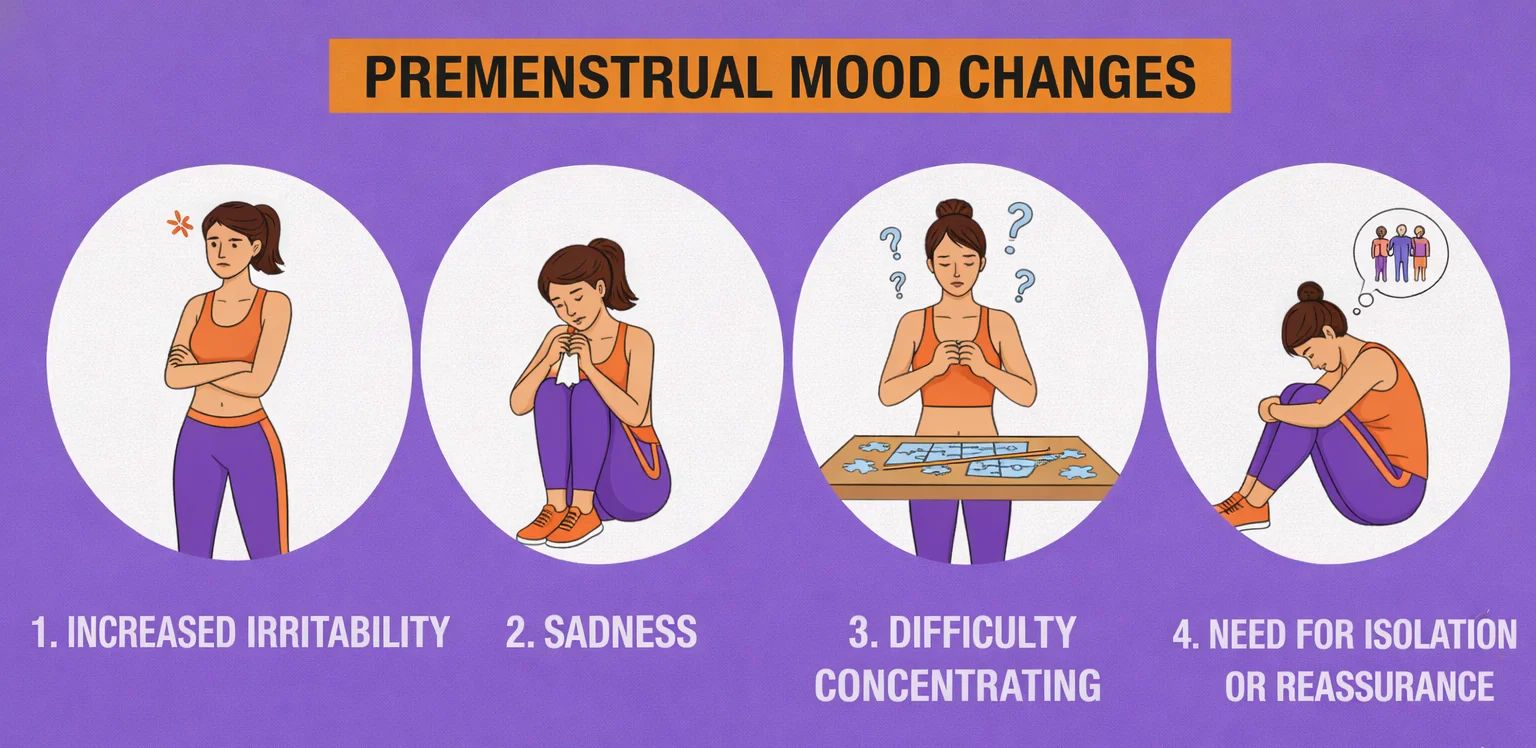
Some frequent manifestations include:
- Increased irritability or quick anger
- Feelings of sadness or melancholy
- Difficulty concentrating
- Feeling emotionally overwhelmed
- Need for isolation or, conversely, for greater emotional containment
These responses do not indicate weakness or lack of control. They are physiological and emotional reactions that deserve attention and care.
Premenstrual Stress and Mood Changes: A Direct Relationship
Premenstrual stress and mood changes are closely related. During the phase before menstruation, the capacity for emotional self-regulation may be reduced, making everyday stress have a greater impact.
Furthermore, the body can show physical signs of stress, such as muscle tension, sleep disturbances, or digestive discomfort, which in turn influence mood. This feedback loop explains why reducing stress not only improves overall well-being but can also soften emotional changes.
Strategies to Reduce Premenstrual Stress
There is no single or immediate solution. Reducing premenstrual stress often requires a combined approach that considers the body, mind, and environment.
Listen to Your Body and Adjust Your Pace
During the premenstrual phase, the body often asks for more rest and less demand. Adjusting your daily pace, reducing unnecessary commitments, and prioritizing self-care can make a significant difference. It's not about "giving up," but about consciously responding to the needs of your cycle.
Gentle and Mindful Movement
Intense exercise is not always suitable in this phase. Activities like walking, gentle stretching, or breathing practices help release tension without overloading the nervous system. According to experiences shared by many people, mindful movement contributes to greater emotional stability.
Nutrition and Energy
Although diet does not eliminate mood changes, it can influence how they are perceived. Maintaining stable energy levels, avoiding large sugar spikes, and ensuring sufficient intake of basic nutrients can help reduce the feeling of exhaustion that often intensifies emotional discomfort.
Sleep and Real Rest
Sleep quality is a key factor. Poor sleep amplifies irritability and the feeling of stress. Creating more consistent rest routines and respecting signs of fatigue is especially important in the days leading up to your period.
Emotional Management Without Judgment
Accepting that mood changes are part of the cycle reduces self-imposed pressure. Naming what you feel, without judging or minimizing it, allows for a kinder relationship with your own body. Self-observation, without dramatizing or ignoring, is a powerful tool.
When Mood Changes Interfere with Daily Life
Although premenstrual mood changes are usually mild or moderate, in some cases they can significantly affect personal, work, or social life. When emotional discomfort is intense, persistent, or disabling, it is advisable to consider other support options.
Consulting with healthcare professionals allows you to rule out hormonal imbalances, nutritional deficiencies, or other conditions that may be influencing. Seeking help does not mean automatically medicalizing the experience, but rather expanding the scope of understanding and care.
Breaking the Stigmas Around Mood and Your Period
For a long time, mood changes associated with menstruation have been used to discredit emotions or downplay their importance. This approach is not only unfair but also prevents honest dialogue about menstrual health.
Recognizing emotional changes as a legitimate bodily response allows them to be addressed with greater respect and effectiveness. It is not about justifying any reaction, but about understanding the physiological and emotional context in which it occurs.
Understanding Your Cycle as a Self-Care Tool
Understanding your own menstrual cycle provides a solid foundation for anticipating and managing mood changes. Observing patterns, identifying times of greater sensitivity, and adjusting expectations facilitates a more balanced relationship with your body. This knowledge does not seek to control the cycle, but to coexist with it more consciously.
If you are looking for a comfortable and body-respecting option to manage your menstruation, you can learn more about menstrual cups, which help maintain well-being and reduce discomfort during your period. You can also check the size guide to find the perfect cup that fits your needs and enjoy a more stress-free cycle.
Signs of Trust and Responsibility
Each body responds differently to hormonal changes and stress. Strategies that work for one person may not be suitable for another. Furthermore, external factors such as work, emotional, or social context have a significant influence.
In case of any persistent doubt, intense symptoms, or sudden changes in mood, it is advisable to review the situation with qualified professionals. General information does not replace an individualized assessment.
Conclusion: A Clearer View on Mood Changes
Mood changes before your period are not a failure of your body nor an emotional exaggeration. They are a sign that the body is going through a specific phase of the menstrual cycle that deserves attention, understanding, and care.
Reducing premenstrual stress does not mean eliminating emotions, but creating kinder conditions to move through them. Listening to your body, adjusting your pace, and understanding your own cycle allows you to transform an uncomfortable experience into an opportunity for greater self-awareness.
Talking about mood changes from an informed and responsible perspective helps normalize the conversation about menstrual health and provides real tools for daily well-being. If you are ready to experience your cycle with greater comfort and reduce premenstrual stress, feel free to explore the options that PapayaCup has for you.
FAQ: Mood swings before menstruation
Yes, it is common. Hormonal fluctuations during the premenstrual phase can affect the nervous system and make emotions feel more intense.
Because the body is more sensitive and emotional self-regulation may decrease. Accumulated fatigue and mental load are often amplified during this phase.
Slowing down, prioritizing rest, gentle movement, and supporting healthy sleep can be effective ways to ease irritability and emotional overwhelm.
If mood changes are very intense, interfere with daily life, or worsen with each cycle, it is advisable to seek medical guidance to explore other possible causes.
Yes. Feeling more comfortable during your period can reduce overall discomfort. Methods such as PapayaCup menstrual cups can help you experience your cycle with less inconvenience and greater well-being.